Showing posts with label Egypt. Show all posts

Friday, September 20, 2019

Story of the World Ancient Times - Chapter 13 - Amenhotep and King Tut


The second last half of this chapter of Story of the World deals with the king Amenhotep (later Akhenaten), a Pharaoh who briefly transformed religion and art Egypt, and King Tutankhamun, who during his short reign, changed everything back.    As always, I offer my suggestions for activities and other ways to enhance the reading below.

This post contains some affiliate links through which I can earn commission. 


SUGGESTED BOOK:  ANCIENT EGYPT REVEALED

As you know, I ALWAYS look for pictures from library books or online to illustrate the chapter (cause for my visual learner, one black and white pic isn't enough).   Usually, any kids books related to the subject will have some pictures that would work to illustrate the chapter and it doesn't really matter which one you get...but for this subject this book was SO PERFECT for illustrating that I think it's worth searching for specifically (maybe even doing interlibrary loan for).    It had a really good pictures of Amenhotep...a large statue of him and a wall carving of him and his wife Nefertiti, and more pictures of her on another page (search for Akhenaten, his other name, in the index to find it)  But where it really shines for this chapter is the TWO special lift the flap pages related to King tut (see pictures and/or video below).  


Amenhotep

One interesting thing about Amenhotep/Akhenaten that SOTW doesn't mention is how he changed art in Egypt.   For thousands of years before Akhenaten, and for nearly 1000 years after his reign, Egyptian art remained largely the same.  But for a brief period of about 60 years during his reign and shortly afterwards, the style of artwork in Egypt changed.   This period of time was called the Armana period.  The videos below all share a little something about this...

VIDEO SUGGESTIONS

TICE ART 1010 - Ancient Near Eastern and Ancient Egyptian Art (4 min)
This video is about Ancient Egyptian Art in general (and Mesopotamian art, but I've set the link to start at the Egyptian section), and is done in a cartoon style that would be fun for even young kids to watch.    It only briefly covers the art of the Armana period, but I like it because it shows what Egyptian art was like before and after that period, for contrast.

Armana Period (10 min)
This video covers more about both the religious and  artistic changes during this period.   Sadly it's a little grainy and may not be as fun for younger kids.

Egypt's Armana Period (11 min)
The first half of this video first talks about the discovery of King Tut's Tomb (so would be a great tie-in between the first and last parts of this SOTW section), and from 4:46 on talks about Amenhotep/Akhenaten.   It mostly focuses on the religious changes but gets into the art style change a bit too.  It's a very engaging video.


ILLUSTRATION SUGGESTIONS
Good places to find illustrations to use in the chapter.   


King Tut

ILLUSTRATION SUGGESTIONS
Nearly all children's books on Ancient Egypt will have some illustrations of King Tut.   The original version of SOTW had an illustration of his mask in the chapter, and the Revised has a coloring page of it the activity book.   You can also find beautiful pictures of the mask and other art and statues of King Tut with a quick search online.

But again I want to recommend DK Ancient Egypt Revealed for illustration here. The "lift the flap" pages on Tutankhamen (transparent pages that show part of the picture underneath, and as you lift the page more detail is revealed) were a really dramatic way to illustrate this part of the chapter (as I showed on the video below).   This also shows some cool techniques I have for organizing the illustration pages I use from other books while reading Story of the World.   The video also features the book Make It Work:  Ancient Egypt that had some good illustrations of Tutankhamen's tomb.


ACTIVITY IDEAS

Pharaoh Headress Printable (wearable)

3D Egyptian Death Mask

Make Pharoah's Crock and Flail

Coloring Page (Crowning/Marriage)

Coloring Page (mask) 

How to Draw King Tut


VIDEOS

PBS Special on King Tut (27 minutes)

King Tut's Tomb and Armana Period  (11 minutes)
I mentioned this one earlier but am mentioning it again.  The first half of this video first talks about the discovery of King Tut's Tomband from 4:46 on talks about Amenhotep/Akhenaten.

Ancient Civilizations for Kids -Ancient Egypt
From 1:30 - 5:59 has a really good dramatic retelling of the discovery of King Tut's tomb.   It reminds me of the description in SOTW.


BETWEEN THE CHAPTERS

The Bronze Age Collapse  is a significant event that takes place less than 100 years after King Tut reigned in Egypt.    It's not addressed in SOTW but after this chapter would be a good place to add it in.  Extra Credits History has a good short kid friendly video on it.


Last :: Next

Wednesday, August 29, 2018

Story of the World Ancient Times - Chap 13 - The General and the Woman Pharoah

This post contains some Amazon affiliate links through which I can earn commission.

The picture above shows Thutmose III and Hatshepsut.   Thutmose III was co-regent for a time with Hatshepsut (his stepmother and aunt).   I originally thought this was Thutmose I and Hatshepsut, but decided to leave it as the chapter intro anyways.  I'm not sure which one is which.

The first  section of this chapter in  Story of the World  is about two great Pharaohs:  Thutmose I, and his daughter, Hatshepsut, one of the few women Pharaohs in Egypt's history.   Whether you're using this curriculum or another, I hope you find these resources to supplement your history lessons useful (I have a lot more on Hatshepset below that could be used apart from SOTW)!


Thutmose I

From British Museum - Shared by Capmondo

Apart from looking at some pictures like the one above, we didn't do much the supplement the section on Thutmose I.  Below is a map which would also be useful...it shows Egyptian territory during his reign. 

Map of Egypt in 1450 BC 


Shared by Andrei nacu at English Wikipedia
Under  Creative Commons Attribution-Share Alike
 3.0 Unported, 2.5 Generic, 2.0 Generic and 1.0 Generic licenses 


Hatshepsut

 Shared by Postdlf under Creative Commons 

Hatshepsut is not just famous for being a women Pharoah...she is considered by many to be one of the greatest Pharaohs!  

I first learned about Hatshepsut reading The Egypt Game as a child, and have been fascinated with her ever since.   So, I was very excited to learn that she was covered in SOTW.  I thought they covered her well, but there was one oversight about Hatshepsut in this chapter (an understandable one since it's information that has only come out relatively recently).

This chapter in Story of the World said that Hatshepsut didn't fight any wars.  But she did.  According to the book 'Hatchepust, the Female Pharoah' by Joyce Tyldesley, which came out shortly after the first edition of Story of the World, there is growing evidence of Hatshepsut's "military prowess."   During her reign wars were fought against Nubia, the nations of the Upper Nile,  against the Ethiopians, and probably also against the Asiatics.  However, the book also did say that "Hatchepsut's military policy is perhaps best described as one of unobtrusive control; active defense rather than deliberate offense."  

(Foreign names tend to have various spellings in translation.  Hatchepsut is just another variation). 

Here's a few  random facts about Hatshepsut not included in the chapter that also might be fun to share....

  • Hatshepsut was actually not the first woman Pharaoh.   Sobekneferu ruled 3 centuries before her (though she had a short reign), and other earlier women pharaohs are rumored.
  • Hatshepsut had an interest in wild and exotic animals, and during her reign had a collection of live animals, perhaps somewhat like a zoo, that included apes, mon­keys, birds, grey­hounds, cat­tle, leop­ards, chee­tahs, rhi­noc­er­oses, and giraffes.

All text and works on About Zoos, unless stated otherwise are licensed under a Creative Commons Attribution-ShareAlike 3.0 Unported License.
See also copyright notice. It will be much appreciated when you at least refer to >> Source:
About Zoos- http://aboutzoos.info

  • Hatshepsut died at the age of 50.   Scientists believe she may have been killed by gradual exposure to toxins in a cream she used for a skin condition.  


WOMEN IN EGYPT

In this chapter of SOTW it says that the only jobs women in Egypt were allowed to do was to be a wife and mother, priestess, or dancer.  This was somewhat true for upper class women (though they could also be musicians or professional mourners, and even being a wife involved managing the servants of the household, so it was more than just taking care of and teaching children).     But among the lower and middle classes there were many other jobs done by women.    Women could also be musicians, weavers, servants, cooks, perfumers, and even doctors.   Farmer's wives worked alongside their husbands in the fields, and women were sometimes known to manage farms or businesses in the absence of their husbands or sons.

This TedEd video is about an ancient Egyptian doctor (who just happens to be a woman).


ACTIVITIES

VIDEO
TedEd - The Hidden History of Hatshepsut
I love this short video by TedEd which tells more interesting details about this ruler.

TOUR HATSHEPSUT'S MORTUARY TEMPLE
The entrance to Hatshepsut's mortuary temple, one of her many building projects. (There used to be a whole tour through multiple buildings but that's been taken down, unfortunately) 

MAKE a PHARAOH COSTUME 
There are printable Pharoah Headress here that would make a fun craft for this unit.  If you also wanted to make a fake beard, there's a picture of a toilet paper roll one here that wouldn't be hard to follow (sorry, just a picture, not instructions).    (Alternate printable idea with mask and collar here, but using a shirt for the headdress, that also has a good printable beard)


Last :: Next


Shared on The Bookshelf and Throwback Thursday

Saturday, May 19, 2018

Story of the World Ancient Times - Chap 12 - The Hyksos


This post contains some affiliate links through which I can earn commission.

This chapter in Story of the World was about the Hyksos...a group of people that temporarily took over Egypt.  The Hyksos, among other things, introduced the chariot to Egypt. Honestly...all we did for this chapter was read it and look at some pictures of Egyptian chariots.  If you happen to have a PBS membership, I've been told this video on Egyptian chariots is really cool.   And if you scroll down, there are some links to some great chariot crafts you can do if you're looking for something more craftsy.


 Museum replica of an Egyptian Chariot
This picture by Einsamer Schütze is licensed under the Creative Commons Attribution 2.0 Generic license. 

(Click Picture to Enlarge)


Museum Replica of Tutankhamun’s chariot (See Chapter 13).
This picture by Carston Frenzl is licensed under the Creative Commons Attribution 2.0 Generic license.


ACTIVITY:   MAKE A CHARIOT

Chariot Craft (Probably a bit more Roman than Egyptian), pg 48-49

Chariot Snack (Great for the preschool set)

Life Size Chariot (for those who want to go all out)

Or, if you have the book Make It Work: Ancient Egypt  in your library, they have a great detailed craft of an Egyptian chariot (which you can see looks a lot like the first chariot pictured above, so pretty authentic)...


CHANGES IN THE REVISED VERSION
Also, you should note that this is one chapter where there is meaningful difference between the original and revised version.  The revised version reflects more recent archaeological evidence that shows that  the Hyksos didn't suddenly invade...they gradually settled in Egypt in large in numbers, and then rose up and took over.   (See more changes here )

This becomes important when you come to the Biblical story of the Exodus (Chap 14).  The fear that Pharoah had of the Israelites "becoming too numerous" makes so much sense when we know that another group, the Hyksos, had once entered the land gradually and grown in numbers before taking over.


Saturday, February 17, 2018

Story of the World Ancient Times - Chap 12 - Egypt and Nubia


This is part of a series where I share our lessons (and other related resources) for each chapter of Story of the World - Ancient Times.    Even if you're not using Story of the World, if you are studying ancient history, hopefully this will be helpful to you.  Today we get into some really interesting history that's too often overlooked, and why it's so important!

Though this section of Chapter is about Egypt, once again...it is also about Nubia...so I will be talking quite a bit about that today.   But first, a bit about Queen Tiye (who is presented in Story of the World as an Egyptian queen from Nubian  (but was she?).   Read on to learn more...


ABOUT QUEEN TIYE

 Photo By Rolf Dietrich Brecher from Germany (Teje)


Tiye is an amazingly interesting character...and after researching her I'm actually a little disappointed that so little about her is actually said in this chapter, because she is fascinating.

Married to pharaoh Amenhotep III, she wielded real power (moreso than  previous Egyptian queens).  She was the first Egyptian queen to have her name written on official acts, and was mentioned in foreign correspondence.     In statues of her and Amenhotep III, she was depicted as the same height as the Pharaoh  (in previous statuary, the Pharaoh had always been depicted as larger than his Queen, to emphasize his greater power and importance.).

From inscriptions and the letters found at Armarna, it is clear that Tiye was in every way the equal of her husband and presided at festivals, met with foreign dignitaries, and directed both domestic and foreign policies.
Ancient History Encyclopedia

The main point made about her in Story of the World is that she was Nubian, but as it turns out, that point is debatable.  Some historians say that her parents may have been Nubian or of Nubian decent, others disagree...but regardless of who is right in that debate, Tiye herself grew up in Egypt, in the Royal palace, not in Nubia.

I feel the need to take an aside here and note that whether she was Nubian is an entirely different question than whether she was black.       We look at Egyptian art and find a number of skin tones, which makes sense considering where Egypt is located, in the gateway between Europe, Asia and the rest of Africa.  But the whole question of what race the Egyptians were is steeped in controversy...and racism.    Europeans in the 19th century seeking to justify the subjugation of Africans categorized them as lesser and separate, and so felt the need to try to separate Egypt from the rest of Africa by categorizing them as a different race than the rest of Africa.    But ancient Egyptians didn't have the concept of race that developed during that later period of history, which has had such an impact on people since.  And, modern genetic scientists (as well as most anthropologists) have rejected the idea of different biologically separate races (even if race is still "culturally real"). 

"Any characterization of race of the ancient Egyptians depends on modern cultural definitions, not on scientific study. Thus, by modern American standards it is reasonable to characterize the Egyptians as 'black', while acknowledging the scientific evidence for the physical diversity of Africans."
Stuart Tyson Smith  ( The Oxford encyclopedia of ancient Egypt, Volume 3 - Located through Wikipdia: Ancient Egyptian Race Controversy)

And here is the reason I felt it was important to talk about this:    While searching for images for this chapter I accidentally stumbled on a very racist cartoon who's main message was that that African history shows the inferiority of black people.  It showed an ugly drawing of an idiotic looking tribal man with a bone through his nose, next to a hut, and said above it "Blacks like to talk about their rich African history.  Here's their rich African history."   It looked like something from an earlier generation, but sadly recent events in the news have shown me that ideology is not dead.  So, while I didn't choose to go as much into all this racial history with my eight year old as I just have here, we did take some time to learn more about Nubia and the Nubian Pharaohs than SOTW covered,  partially so that one day my son will have more ammunition to combat that kind of ignorance, if he ever comes across it.   Nubia and Egypt are not the only great African civilizations, so am glad to see that Story of the World covers some some of the others in later volumes as well.  

If you would like to also cover Nubia and the Nubian pharaohs in a little more detail than Story of the World does, there are some excellent resources below...


NUBIAN PHARAOHS - SUPPLEMENTARY VIDEO
The Nubian Pharaohs mentioned briefly in paragraph 8 actually reigned long after the Middle Kingdom.  To learn more about them, my son and I watched the section "Nubians Regain Rule/Tarharka Dynasty" from minute 29:20 to 34:40 of the video below (we watched the first part of this video to supplement Chapter 11).  The part about Egyptian Invasion (21:45 - 26:34) also related directly to the chapter as well, but since we already covered that in the reading I skipped over that.

Lost Kingdoms of Africa: Nubia (Covers Sahara civilization too).
I went ahead and charted out the minutes for your convenience below, in case you just wanted to use other parts of this.

0 - 4:28 - Intro
4:28 -  7:41 - Rock Gong, beginning of Nubian culture
7:42 - 10:56 - Rock Art and Climate Change (When the Sahara Was Green)
10:56 - 14:20 - Kerma (main city in Kush/Nubia) and Deffufa (huge brick structure)
14:20 - 16:48  - Kerma Pottery
16:49 - 21:41 - Kerma Burial Plot
21:42 - 21:45 - What Happened to Kerma (transition)
21:45 - 26:34 - Egyptian Invasion/Jebel Barkal
26:35 - 29:19 - Sufi Mystics Today at Jebel Barkal
29:20 - 34:40 - Nubians Regain Rule/Tarharka Dynasty
34:41 - 38:43 - Desert Encroaches/Meroe
38:44 - 40:56 - Iron
40:56 - 41:58 - Desert Encroaches Again
41:59 - 45:41 - Nomads
45:42 - End   - Central Sudan (Modern Times)


PICTURES TO SUPPLEMENT THIS CHAPTER
We used some pictures we found online to supplement this chapter...below are links and paragraph from this chapter the pictures relate to.

Paragraph 3
Amenemhet

Paragraph 6
Nubian Trade Goods intro image

Paragraph 7
Nubian Archers
Nubian Warrior

Paragraph 8 - 9
Tiye (the statue the picture in the book was based off of) (Par 8)
...and, if your child is interested in mummies,  you can also see a picture of Tiye's mummy here.
Nubian Pharaohs - scroll down, picture under map
Tarharqa (Nubian Pharoah)
Taharqa and Entourage 
Taharqa Statue


SUGGESTED BOOKS
                                                                                        
Ancient Egyptians and Their Neighbors
If you want your children to learn more about ancient Nubia and do some crafts or activities related to it, this is the best book I've found on the subject for children.  It  has a whole section on Nubia as well as sections on the Hittites, Mesopotamians, and Egyptians (a small section on the Nubian pharaohs is, if I remember right, in the section on Egypt).  The only thing I dislike about this book is that it's entirely in black and white (save for the cover).

DK Ancient Egypt Revealed
I only mention this book here because it is AMAZING for using with Chapter 13, and while it just has a few things related to Chap 12 (pictures of Nubians, a mention brief mention of the Hyksos discussed in the next subsection), it's worth picking up at your local library early if they have it, since you'll want to use it for next chapter too.


Graphic for Sharing

Friday, November 10, 2017

Story of the World Ancient Times - Chap 11 - Africa

Photo of Saharan Rock art by  David Stanley from Nanaimo, Canada [CC BY 2.0], via Wikimedia Commons

This post contains some affiliate links through which I can earn commission.

This chapter of Story of the World was called "Africa," but it could have been called "The Mysterious disappearance of the Green Sahara!"    (Wouldn't that have made a great title?!).  

I got to do the lesson for this chapter at our co-op...which was a little intimidating, since ancient Africa, outside of Egypt, is a subject I knew very little about.   So I dug in and researched, and had so much fun sharing what I'd learned.

NOTE:   If you are studying Africa but not using Story of the World, just skip the first section.


SOTW Reading:  Ancient Peoples of West Africa

First, here's what we did at home during the reading.

NOTE:  Paragraph notes are for the REVISED version of Story of the World, Volume 1.   The original may have a different number of paragraphs.

Paragraph 1-5
I really like how the text guides kids to trace out paths on the map with their finger...we did this, and as always, putting actions to words really helped keep my child engaged.

Paragraph 6 - 10
When it got to the part about the paintings people left behind them (par. 8), I brought up this Pinterest board I had put together on my phone and we stopped and looked at some of the pictures, and talked about them.  I asked my son what type of animals he could tell they had from the pictures.   I included this picture to show what that area looks like now, and asked him if he thought those animals could survive in a place like that.  We talked about how that's one way they knew the Sahara used to be different. 

We followed up by watching a portion of a video about ancient Nubia (see the activities section below).

The Science Behind It
If you're curious WHY the Sahara turned Green, Scientists have a theory:   they think it was due to a change in the Earth's tilt.    You can read more about it in this article in Astrobiology, a online magazine sponsored by NASA. 
 

Sections 2 - 3:   Anansi and Turtle, Anansi and the Make Believe Food

At home, we read Ananse's Feast, a children's book we found in our local library, in stead of "Anansi and Turtle" in Story of the World.  It tells the same tale, and has charming pictures with African cultural details.  If I had more time, I think I would have tried to cook some of the traditional food mentioned in the story for an extra activity. 

Now, even if you can't find this book, there's a good chance you will be able to find some of the Anansi stories at your library (though we didn't find the second story about the Make Believe Food, which I ended up just skipping.)  Searching for these folk tales can be a bit tricky, though, because there are various spellings of the African names involved (Anansi was spelled "Ananse" in the storybook we found, and some versions of these tales just call him "Spider." )  And if you're searching under Ashanti folktales it gets worse--I've seen it spelled Asante, Asanti, etc..  So, I suggest just finding your library's section on African folktales, and browse it for stories featuring spiders.


Activities


VIDEO

I found a  video which covers the green Sahara drying up, and also the early days of Nubia (or Kush), from BEFORE the Egyptians invaded to the end of the Kingdom when it succumbed to the desert.  Even thought this is in EAST Africa, it's still the Sahara, so I decdied to include it (it also segments well into what we will study in the next chapter).   We watched the sections from 4:20-14:20 (see chart below), both at home and at co-op.   The kids at co-op really liked the part about the Rock Gong, and they liked seeing the rock art.  I had included the part about Kerma, even though it was stepping into things from chapter 12 (on East Africa, not West)...it was such a fascinating structure to me, and my son had liked learning about it at home, so I wanted to share it with the kids at co-op.  But, at co-op, the kids sort of lost interest at this point.  I guess 10 minutes is a long time to hold attention on a documentary when there's friends to talk with nearby.

Lost Kingdoms of Africa: Nubia (Covers Sahara civilization too).I went ahead and charted out the minutes for your convenience below, in case you just wanted to use parts of this, as we did...  (NOTE:   The video was taken down but I found a new replacement.   The timing is pretty close but a little off so all of this below will be slightly off until I can go through an fix it). 

0 - 4:28 - Intro
4:20 -  7:41 - Rock Gong, beginning of Nubian culture
7:42 - 10:56 - Rock Art and Climate Change (When the Sahara Was Green)
10:56 - 14:20 - Kerma (main city in Kush/Nubia) and Deffufa (huge brick structure)
14:20 - 16:48  - Kerma Pottery
16:49 - 21:41 - Kerma Burial Plot
21:42 - 21:45 - What Happened to Kerma (transition)
21:45 - 26:34 - Egyptian Invasion/Jebel Barkal
26:35 - 29:19 - Sufi Mystics Today at Jebel Barkal
29:20 - 34:40 - Nubians Regain Rule/Tarharka Dynasty
34:41 - 38:43 - Desert Encroaches/Meroe
38:44 - 40:56 - Iron
40:56 - 41:58 - Desert Encroaches Again
41:59 - 45:41 - Nomads
45:42 - End   - Central Sudan (Modern Times)

We used more of this next chapter, which talks more about ancient Nubia.

African Homes Exploration & Craft

Picture of houses  in Nakpanduri, Ghana by Hugues

I decided to make traditional African round house model for our co-op craft,  (a craft I found in this book, which has a large section on Nubia. ).   Even though it doesn't connect directly with Saharan Africa, since we don't know what kind of structures, if any, the people there had, roundhouses seem to be ubiquitous throughout a large area of Africa (I found examples in many, many African countries).  But mostly I chose it because it was the one idea I had that my son actually liked.

Before we started the craft, I wanted to show the kids some examples of some traditional African round-houses actually being used today. But, I didn't want to perpetuate the stereotype that all people in Africa still live in these types of homes, so I filled up a pinterest page not just with the traditional grass roofed round-houses, but  modern houses and buildings in various countries in Africa as well.  I'm so glad I did.  The kids were fascinated by the variety of houses I showed them.  Some were really surprised to learn that African cities had skyscrapers.  Worldviews were expanded, and that made my day.

The craft itself, however, was a flop.  When I brought out the clay and other supplies to actually make some hut models, only two of  the kids were interested, and even they gave up half way through making them. Even my own son, who had helped me choose the craft, didn't want to do it.  Turns out he thought we would be making a LIFE SIZED ONE (insert eyeroll here).


Random Related Star Wars Trivia

Tataoine buildings picture by Ksar ouledsoltane06
Berber Grain Silos in Tataouine, Tunisia
Photo by Asram (Self-photographed) via Wikimedia Commons 


Found out something pretty cool while browing those buildings on pinterest.  The buildings above are from a town in the middle of the Sahara called Tataouine...and yes, if that sounds a lot like Tatooine, the Star Wars planet, it's because it's name and style of buildings did inspire Tatooine in Star Wars. George Lucas didn't do any filming there but did do some in another nearby Tunisian town.


Books to Follow This Rabbit Trail
Here are two books you might consider if you want to follow-up by learning more about houses all over the world, not just Africa...

If You Lived Here:  Houses of the World
I have not read this one--I found a post about it on the blog Our Unschooling Journey right after writing this post, and had to add it.  It looks like such a fun read, and would have gone so well with this lesson. 


Homes
This is a book I already had, and wish I had remembered when we did this lesson.  It has pictures of all sorts of houses (many per page), and covers topics like building material, daily life at home, doors and windows, etc...


Rock Art Activity

Another great activity I didn't try would be to make some rock art, maybe even look up and compare other ancient rock art around the world.   You could get actual rocks at a garden center to paint on, maybe even try out paints made out of different natural substances to see which would stay.   Or you could use these ideas....

"Rock Art" On Crumpled Paper

"Rock Art" On Faux Stone


More Books and Movies About Africa
These aren't necessarily related to this time period, but if your child is curious to learn more about Africa, here's a good place to start:

55 Books About Africa

15 Movies About Africa

Books about Africa 


Alternate graphic for linkies and sharing.... 


Saturday, May 27, 2017

Story of the World: Vol 1 - Ch 4 - Pyramids


Post contains some affiliate links, through which I can earn commission.
Mostly for books, which I suggest looking for at your local library.


I'll have to be honest...after the first few chapters I was having trouble blogging AND planning and actually, you know....homeschooling.  So I took a break though I kept taking notes...mostly.

You see, I sort of missed this section.  Sorry.  No paragraph by paragraph rundown this time.   Though, for the first couple paragraphs, I do suggest searching pinterest for Mastaba tomb pictures...there's plenty.  And any non-fiction picture book on Egypt should have plenty of pictures of pyramids, usually including illustrations of the inside of the great pyramid.  However, if you want a book JUST about pyramids, I suggest Pyramids by Anne Millard

Now, I do remember the activities we did.

First, we watched a video about one recent theory about how the pyramids were made (I made sure to mention that it was only one of many, but we didn't try to go through all the theories).  On that same site there's a link to an interactive program (that required 3D glasses and some downloadable plug-ins...so we didn't do that, but it might be fun).  There's another cute video here that's a little more kid-friendly.   And, you can explore the Pyramids and surrounding areas virtually on Roundme.

Next we built a pyramid out of Legos...with an extra addition to the top.


Don't have Legos, or want to do something a little different?   You can use sugar cubes or Rice Crispie squares, or for challenge for older kids, cardboard and hot glue or even toothpicks!    Over at The Boys of Black Mountain they went further and explored the process by modeling how the large bricks might have been moved. 


Math Tie Ins: 3D SHAPES
Since this lesson deals with pyramids, and the next lesson activity suggestion was "cylinder seals"  I thought this would be a great time to learn about 3D shapes.

We covered one shape a day (starting with pyramids and cylinders with the related SOTW chapters), then moving on to unrelated shapes like cubes and spheres.  We would color a page in a printable book, make the 3D paper shape every day and then practice drawing it, using simple online tutorials when necessary.

3D Shapes Printable Book

3D Shapes Printable Book (For Older Kids)

3D Egyptian Style Pyramid Foldable

3D Shapes Foldables

BOOK:   Mummy Math
by by Cindy Neuschwander and Bryan Langdo is a story we read involving Egypt and a mystery solved using 3D shapes.


MATH Tie In 2: Counting Blocks and Number Patterns

Over at The Boys of Black Mountain they did some neat activities looking at the number patterns created by building a solid pyramid of blocks.


Thanks to the following link-ups 
where this link is shared...


 Graphic For Pinning/Posting


Thursday, December 29, 2016

Story of the World: Vol 1 - Chap 4 - Making Mummies


I know this is labeled as a "Story of the World" post, but we actually didn't use the text for this lesson.   However, all the activities work perfectly with Chapter 4 - Making Mummies.   If you aren't using Story of the World, these activities would make a great little unit study on Egyptian Mummies!

We had already read about the mummification process in several different library books on Egypt, so I wanted to take a different tack and look at the science behind how mummification works.

Nit-Picky Fact Check:  Technically,the mummification process described in Chapter 4 of Story of the World was really not fully developed until the New Kingdom (though I don't know if I would have cared enough to tweak this if there hadn't been other reasons to).

For our alternative text we used a page from "Science of Ancient Egypt:  Mummification" (part of a larger bundle on Ancient Egypt by Dr. Dave's science which I bought after falling in love with his free sample unit on The Nile).   It covered some things that the other books we read didn't about the science behind making mummies (like how microorganisms are involved in breaking down bodies, and how Natron, the salt mixture the Egyptians used in mummification, prevented these from growing by removing moisture).

While the Unit Study was for 4th - 7th graders,  we did this when my son was a 1st grader with a Kindergarten sized attention span.  I felt like the material was engaging and kid friendly enough for him to handle...especially since he loves science.  (And I was right)

I didn't try to cover the whole unit though, since I knew that would be an attention span stretch.  In stead I  used a couple of pages from it for this lesson, and I did what I always do...added some tactiles and visuals, and of course, lots of questions. 

First, we reviewed Egyptian mummification with this video...


Then, before we dug into the text, I took my son outside to see something I knew had been sitting out by the fence in our yard...the remains of a dead bird.   I knew it would be a great example of what happens to an animal after it dies...and how microorganisms take part in that process (though I'm sure ants took a part too).

Feel free to save and print this picture as an alternative to
viewing a real decomposing animal.

I pointed out the bones and the beak and the feather, and asked my son "What do you think happened to the rest of it, all the bird's muscles and stuff?"

He gave a guess about the bird going to heaven (theology lessons pop up when least expected, don't they?).

"Well, the Bible doesn't say whether birds go to Heaven.  Some people think they do, and some people don't, but we don't know.   But when people go to Heaven it says God gives us new bodies...so our old bodies stay here when we die.   So even if animals go to Heaven it doesn't mean their bodies do too.  So what do you think happened to the bird's body?"

I let him give a couple more guesses and then said, "Lets go inside and find out!"  That got him interested and he listened intently as I read the whole page on "Preserving the Body"  which talked about how microorganisms break up and consume dead things and how the mummification process prevents that.

At that my son expressed some fears about microorganisms eating him...so I told him about how when we're living that our cells have ways of fighting bad bacteria and germs, and that other bacteria lives in our body and doesn't hurt us, but when someone or something dies than its cells die too, and so the microorganisms then start to eat the dead cells.

(Yeah, all that...it was all off the cuff and I wasn't sure if that was completely correct, though it did assuage his fears.  Later I checked up on it and got this great answer from someone on Answers.com.  I was pretty on target...but he gave some extra details that were really great.   That answer isn't around anymore...but there's a similar one on Quora)

While the video below doesn't directly answer that question, it does describe the process of decomposition and would be a good resource to share with older kids for this study.   I don't suggest this for younger kids because some of the illustrations could be scary for them (though every kid is different...you could preview it and see if you thought it would work for your child).   After minute 2:27 it talks about the problem of burial space/cost and some solutions, which is not as related to this lesson, so you may want to stop there (though it is interesting). 


If your kids are interested in learning more about what we do with bodies to prepare them for burial today, this page also has good information.


We skipped the next page of the mummification unit study ("Salt) to come back to after we had done our egg experiment (as it gives away the end), and read the first paragraph of "The Chemistry of Salt."  This  paragraph talks about how salt is a mixture and how there are different kinds of salt (even baking soda is, chemically, a salt). So, I showed him some....


Aw, the salt looks like a funny monster face.
Click on it to see the different salts enlarged.


We looked at regular salt, coarse ground sea salt, Himalayan sea salt, Epson salts, and baking soda.  I left these out on a dish for him touch and play with while I read the next paragraph about natron.  When we got to the last paragraph about where the Egyptians got natron (in the Natron Valley, in the Nile Delta), we looked it up on our map.

MAP TIPS:   Most ancient Egyptian maps won't have the Natron Valley labeled.    It's located on the west side of the Nile Delta (the river area shaped like a V where the Nile meets the Mediterranean.   "Wadi El Natrun" is it's current name, which is actually Arabic (so, a later name).   In Coptic (the language descended from the ancient Egyptian language), it is called Šihēt, meaning "Measure of the Hearts."    (This may still be tied to it being a source of the natron used in mummification, since in ancient Egyptian religion, the heart was weighed before a person could enter the afterlife).  
Egg Mummy Experiment
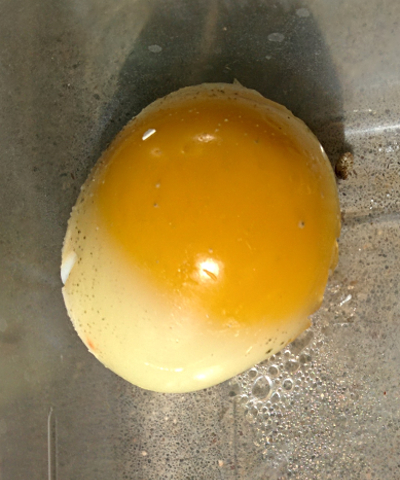
We followed up our study with an experiment where we mummified a hard boiled egg.  I've seen this done with apples too, or a whole chicken (as suggested in the SOTW Activity book).  Several day into our experiment, we read the page on "Salt" that we had earlier skipped, after making guesses as to why our egg had shrunk and hardened.

  1. Hard boil an egg (or two if you want to have a "control" egg...see section below).  Peel off the shell.
  2. Measure the egg with flexible tape ruler and write down results.
  3. Weigh egg and write down results.
  4. Mix an equal amount of salt and baking soda to make an approximation of natron (you can just use salt in stead)...enough to cover an egg.
  5. Put the egg in a cup or open container and cover completely with natron mixture.
  6. Uncover egg and repeat steps 1 - 3 every day for several weeks until the weight and size remains constant.

CONTROL EGG
We also put another egg outside in an open container to see what happened to it (but did not measure it, because I knew after a while we wouldn't want to touch that one).  In stead we took pictures.


Below are our pictures of our egg mummy (left) and control egg (right). OK, yes, that first picture is the same egg reversed...cause I didn't take a picture of the mummified one before we put it in the salt.  It's not consecutive days because we didn't take a picture every day (the days shown are as follows:  Day 1, Day 2, Day 5, Day 9, Day 12), and the sizes are not completely to scale, though I did try to show how they shrunk (it was a little more dramatic than the pictures here show, actually).  But you can still get the general idea.

Click to see larger pictures.


(We missed taking a picture of the mummified egg that last day shown, but I thought the changes in the other egg were interesting).   The control egg eventually withered away to nearly nothing and we tossed it.  The mummified egg eventually turned rock hard and gray, but alas I didn't take a final pic. I left it outside and then forgot about it a long time and it was gone (guess it didn't stay forever, but we live in a humid area, not the dry Egyptian desert).  Plus, some animal may have eaten it.

This was a fun lesson and my son really enjoyed it.  I would recommend this experiment for any kids interested in mummies.

Alternative/Additional Activities

Mummify a Chicken (Also in SOTW Activity Book)


Explore and Egyptian Tomb (Ramesses VI)

Explore Museum Collections of Egyptian Mummies and Artifacts Online
(Note, this includes a paid resource...which I haven't previewed.  But if you scroll past that there is also links online museum collections you can explore.)

You can find this post on the Family Friday Link-up,