The following are resources I've found related to African and African countries. Mostly it's free online resources.
I haven't used all of these resources personally. I'm not an expert on this topic, and nor do I have a cultural or ethnic heritage related to Africa, so I wouldn't be the best person for a "best of" list. This is just a "what I've come across" list. I'm compiling this because I feel like Africa is a region of the world that wasn't given enough attention in my own education, and I have tried to give my children more knowledge of Africa than I have.
When the pandemic first hit and many parents were suddenly home with their children and looking up resources to homeschool (or just do something educational with their kids until they were back in school), I made a Africa Unit Study with the idea that maybe some parents would use this while their kids were home. Since then I've collected more homeschooling/educational resources on this topic and needed a separate post to share them. Enjoy.
Note that this is a mix of secular, neutral, and Christian curriculum. I've tried to mark if the curriculum is religious, but may have missed some, so make sure to preview before using if you want to avoid religious or non-religious materials.
KEY TERMS
BOOK STUDY: These are resources intended to be paired with a book related to Africa. The book is usually not included (but libraries often have them). I will try to put more info about the book after the link.
LAPBOOK: A homemade book about a topic, often to be put together in a folder or notebook.
UNIT STUDY: A topical study, often incorporating various subjects in a way that ties them back to the main topic. Can be as short as one day, or as long as a year or more.
Free sample pages from Geography Through Art (On pg 12, numbered 30, they have a craft related to butterfly art which is done in the Central African Republic and several other African nations, not mentioned. I suggest also taking a look at this page to see examples of this art.)
Egypt Note: I've included some resources on modern Egypt, but am not
including resources on Ancient Egypt here because there is SO MUCH
available and it would take up too much of the page.
Ready to Read: On the Savanna, by Gather Round Homeschool Christian curriculum mixing geography and phonics lessons, themed around the African Savanna. This is a single sample lesson from a larger unit, and covers Tanzania, and the phonics concepts of ar vowel teams and r-controlled vowels. The Tanzania material could be used separately from the phonics material.
If you know of other resources that should be on this list, please leave me a comment about them. Thanks!
Africa is an area of the world that too often gets shortchanged in our study of history, so I've sought out resources to learn more about the many cultures and and people's on this vast continent.
The following is a collection of fun activities, videos, and books for learning about Africa. Some of these are things I've already shared related to our regular history lessons, but I'm collecting them here for those wanting to do a separate
Unit Study of Africa.
SECTION 1: AFRICA TODAY
This sections explores various areas and people in Africa today. I suggest doing these activities over several days.
Africa Overview
Africa is a continent with various cultures, landscapes, and over 50 different countries.
This short video gives kids an idea about how wonderfully diverse this continent is.
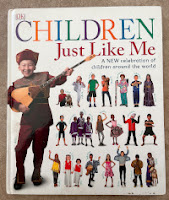
Children Just Like Me is a wonderful book that features modern children from different countries around the world, including many from Africa.
I would read about these children, maybe over several days if you have kids with short attention spans, and look up the country they are from on a map afterwards.
The newer version of this book features children from Morroco, Ethiopia, Tanzania, Botswana, Ghana, and South Africa. The older version of this book has a different set of children (from Egypt, Botswana, Ghana, Morocco, and Tanzania, and Ethiopia). Only the older book is also available free online through Open Library)
You could also see if there are any 365 degree online virtual tours in on the World Map at Round Me in the country that the children are from. I suggest letting kids explore the other "blue dots" in Africa in this site as well, as many as they would like to explore.
I also suggest Africa, Amazing Africa: Country by Country for learning more about the various countries in Africa. It explores 55 different African countries, covering cultural highlights about each in a few short paragraphs, in an engaging and kid friendly way. I suggest pairing it with Children Just like Me, reading about the countries the children come from. If you have more time, you might want to read the whole thing all the way through. And if any of the countries pique your child's interest, and they want to learn more, check out the great homeschool resource list on African and African countries here. We don't have resources on all 55 countries yet, but the list will keep growing! Also, check out the craft book under the "More African Crafts" section below...you might find a craft to go with the country you are learning about too.
When I taught about Africa in our homeschool co-op, we were learning about African history, so I decided to have the kids make a traditional round house model, a traditional style of house which can be found in many areas of Africa.
Before we
started the craft, though, I wanted to show the kids some examples of other types of buildings people in Africa live in. Because while people do live in houses like that in parts of
Africa, even today, they also live in cities like this....
So I filled up this pinterest page
not just with the traditional grass roofed round-houses, but modern
houses and other interesting buildings in various African countries (and a few landscapes just for fun). I'm so
glad I did. The kids were fascinated by the variety of houses I showed
them--they really loved seeing the different styles. And a few of the kids were really surprised to learn that African cities had
skyscrapers. Worldviews were expanded, and that made my day.
Berber Grain Silos in Tataouine, Tunisia
Photo by Asram (Self-photographed) via Wikimedia Commons
I found out something pretty cool while browsing those building pics on Pinterest. The buildings above are from a
town in the middle of the Sahara called Tataouine...and
yes, if that sounds a lot like Tatooine, the Star Wars planet, it's because it's name and style of buildings did inspire Tatooine in the original Star Wars Series. George Lucas didn't do any filming there but did film some scenes in
another nearby Tunisian town.
CRAFT: ROUND HOUSE MODEL
So, sorry I don't have pictures to share of the clay round-house, but it's pretty
simple. For a small solid
house, just roll the clay on a flat surface until you have a round tube a
little bigger than a quarter. Cut the tube down so it's not too
high. Shape the top into a cone and top with dried grass for the roof. Use a small tool like a toothpick or chopsticks to embed a "door" into the house.
More African Crafts Traditional Crafts from Africa by Florence Temko, which you can also view for free at Open Library, has lots of fun African crafts and information about the countries and areas of Africa where they originate. It would be fun to go through the book, pick a craft to do, and look up the country it's from on a map.
Folk tales are a great way to learn about an area's culture. Your best bet for finding great African Folk tales to read is just to sit yourself down in your local library in their folk tale/fairy tale section, and find the section with African books (there often is one). But, I do have a few suggestions.
Ananse's Feast - An Ashante Tale
Ananse stories are popular folk tales in West Africa. We enjoyed Ananse's Feast,
a children's book we found in our local library (you can also find it free online through Open Library). It has
charming pictures with African cultural details.
If you would
like to read more Ananse stories, there's a good chance you will be
able to find some more at your library too. Searching for these folk tales
can be a bit tricky,
though, because there are various spellings of the African names
involved ("Ananse" is often also spelled Anansi, and
some versions of these tales just call him "Spider.")
ACTIVITY: COOK AFRICAN FOOD You can cook some of the traditional food mentioned in the story for an extra activity. I did a little research and I think these are the foods that were described (though I'm not sure about the Yams...there were several recipes with yams it could have been).
Crisp Plantain - Kelewele (spicey, but spice can be reduced/omitted)
Though this book doesn't mention the spider's name, I'm pretty
sure this is another Ananse tale...this time tied to the legend of how
Kente Cloth, a traditional textile found in Ghana, was created. I
found out about this book over at Kitchen Table Classroom, and loved
it's beautiful, colorful illustrations.
You can also find this book free online at Open Library.
ACTIVITY: KENTE CLOTH CRAFT
Kitchen Table Classroom also had a fun craft you can do along with this story
making Kente Cloth patterns on paper (which you can see above). The post also talks about the meaning of the colors of Kente cloth and a little bit of it's history.
This book has favorite stories from some of the children featured in the original Children Just Like Me (the one published in 2005). Two of those stories are from Africa, one from Botswana and one from Morocco. The stories are short and the illustrations are beautiful. (Sadly, I couldn't find this one on Open Library, but I suggest it as it makes a great pairing with Children just like me. ).
I don't have activity suggestions for these stories, but they would be great if your children wanted to learn about other folk tales from around Africa.
SECTION 3: History of Africa The video and book selections below are by no means a complete history of Africa, but just a sampling of historical events from ancient history to about the 1700s. However, if you want to get a general overview, you can explore this world map through time map (focusing on Africa). Underneath the map it shows major developments during each time period.
Though Egypt is absolutely part of Africa and it's history, I am not addressing Egypt directly here because Egypt is usually well covered in any world history curriculum, while the rest of African history is often under represented. Plus it's very easy to find other resources on Egypt. I do suggest finding a good book or video on Egypt to fill this out if Egypt hasn't already been covered in your history curriculum.
Prehistoric and Ancient Africa (Kerma, Nubia/Kush)
The Lost Kingdom of Kush by TedEd (4.34 minutes) This short animated video sums up the history of the Kingdom of Kush. It doesn't get into as much detail as the video below, but is a good quick video, especially for younger kids.
Lost Kingdoms of Africa: Nubia (46 minutes) This is a great documentary, and while it's not specifically aimed at kids, my son who was 7 at the time we watched this enjoyed it quite a bit (though I skipped over some parts).
I went ahead and charted out the minutes for your convenience below, to help you decide what parts to use and good stopping points if you break this up in sections, or want to watch only part of it. However, the video I had used was taken down and I had to find another one, so this might be slightly off.
I find younger children really enjoy the first part about the Rock Gong and Rock Art, but are less interested in other parts.
0 - 4:20 - Intro
4:20 - 7:41 - Rock Gong, beginning of Nubian culture
7:42 - 10:56 - Rock Art and Climate Change (When the Sahara Was Green)
10:56 - 14:20 - Kerma (main city in Kush/Nubia) and Deffufa (huge brick structure)
14:20 - 16:48 - Kerma Pottery
16:49 - 21:41 - Kerma Burial Plot
21:42 - 21:45 - What Happened to Kerma (transition)
21:45 - 26:34 - Egyptian Invasion/Jebel Barkal
26:35 - 29:19 - Sufi Mystics Today at Jebel Barkal
29:20 - 34:40 - Nubians Regain Rule/Tarharka Dynasty
34:41 - 38:43 - Desert Encroaches/Meroe
38:44 - 40:56 - Iron
40:56 - 41:58 - Desert Encroaches Again
41:59 - 45:41 - Nomads
45:42 - End - Central Sudan (Modern Times)
The following activities would be a good follow up to this video.
ACTIVITY: SAHARAN ROCK ART CRAFT This rock art would fit in nicely after learning about
the rock art in the Sahara (first three sections of video above).
Before doing this activity I suggest looking at some examples of Saharan rock art here.
First, collect rocks to paint on. Red, black and brown are common colors for ancient rock art, because these pigments can be made more easily from things found in nature than some other colors. We just used
regular paint in these colors for the rock art painting shown below, but if you have time you can also make your own paint using minerals or gathered material, which would be really fun. For older kids, this article
has more about prehistoric paints, and they have some links toward the
bottom to paint-making activities that explores the chemistry behind it (a nice way to add in an little science).
Here's our rock art. Our son really enjoyed this.
The rock art craft pictured was actually from a craft we did while studying the Lascaux caves in France and Native American rock art in California, but when I saw the Saharan rock art I thought this activity would work well here as well.
ACTIVITY: MAKE MUD BRICKS
The
Kerma Duffafa (explored in the Nubia video above, in minutes 10:56 - 14:20) was a huge structure made of mud bricks. They most
likely made them similarly to how the Egyptians did. You can learn how to make mud bricks with your kids here. (Requires woo, mud from your back yard, and optional grass).
SUGGESTED BOOK - FOR NUBIA
Ancient Egyptians and Their Neighbors
If you want your children to learn more about ancient Nubia and do some
crafts or activities related to it, this is the best book I've found with activities on
the subject for children. It has a whole section on Nubia as well as
sections on the Hittites, Mesopotamians, and Egyptians (a small section
on the Nubian pharaohs is, if I remember right, in the section on
Egypt). The only thing I dislike about this book is that it's entirely
in black and white (save for the cover). Sadly this book is not available on Open Library.
Middle Ages to Renaissance
MANSA MUSA AND THE EMPIRE OF MALI VIDEO: Mansa Musa - by TedEd (3.54 minutes) A good short animated video about Mansa Musa, possibly the richest man who every lived, and his famous pilgrimage. I would watch this or the next video on Mali (which includes the story of Mansa Musa), but you wouldn't need to watch both. VIDEO SERIES: The Empire of Mali - by Extra Credits (Series) This animated web series covers not just Mansa Musa, but the Kingdom of Mali. It has 10 videos, each about 8-10 minutes long. I liked how this put Mansa Musa in context, and spoke more of the great civilization of Mali. (Contains some animated historical violence - preview before showing younger children).
QUEEEN NZINGA AND THE MATAMBA KINGDOMS VIDEO: Queen Nzinga Part I and Part II by Extra Credits Queen Nzinga was a 17th-century queen of the Ndongo and Matamba Kingdoms in what is today known as Angola, who fought for the freedom of her people from the Portuguese. (Contains historical violence - preview before showing younger children).
Early Modern Period I haven't done as much on the modern period, so I apologize that this is rather sparse. THE ZULU
Shaka by Diane Stanley A beautifully illustrated and well written children's book about the story of Shaka. The pictures are engaging very child friendly, though it does have descriptions of violence, so preview before reading to younger children. This book is also available for free on Open Library.
VIDEO: The Zulu - by Extra Credits (web series) A great video about the Zulu that's more kid friendly than the Shaka Zulu movie. (Contains historical violence - preview before showing younger children).
This is part of a series where I share our lessons (and other related resources) for each chapter of Story of the World - Ancient Times. Even if you're not using Story of the World, if you are studying ancient history, hopefully this will be helpful to you. Today we get into some really interesting history that's too often overlooked, and why it's so important!
Though this section of Chapter is about Egypt, once again...it is also about Nubia...so I will be talking quite a bit about that today. But first, a bit about Queen Tiye (who is presented in Story of the World as an Egyptian queen from Nubian (but was she?). Read on to learn more...
ABOUT QUEEN TIYE
Photo By Rolf Dietrich Brecher from Germany (Teje)
Tiye is an amazingly
interesting character...and after researching her I'm actually a little
disappointed that so little about her is actually said in this chapter,
because she is fascinating.
Married to pharaoh Amenhotep III, she
wielded real power (moreso than previous Egyptian queens). She was the first Egyptian queen to have her name
written on official acts, and was mentioned in foreign correspondence.
In
statues of her and Amenhotep III, she was depicted as the same height as
the Pharaoh (in previous statuary, the Pharaoh had always been
depicted as larger than his Queen, to emphasize his greater power and
importance.).
From inscriptions and the letters found at Armarna,
it is clear that Tiye was in every way the equal of her husband and
presided at festivals, met with foreign dignitaries, and directed both
domestic and foreign policies.
The
main
point made about her in Story of the World is that she was Nubian, but
as it turns out, that point is debatable. Some historians say that her
parents may have been Nubian or of Nubian decent, others disagree...but regardless of who is right in that
debate, Tiye herself grew up in Egypt, in the Royal palace, not in
Nubia.
I feel the need to take an
aside here and note that whether she was Nubian is an entirely different
question than whether she was
black. We look at Egyptian art and find a number of skin tones, which
makes sense considering where Egypt is located, in the gateway between
Europe, Asia and the rest of Africa. But the whole question of what race the Egyptians were is steeped in controversy...and racism. Europeans in the 19th century seeking to justify the subjugation of Africans categorized them as lesser and separate, and so felt the need to try to separate
Egypt from the rest of Africa by categorizing them as a different race than the rest of Africa. But ancient Egyptians didn't have the concept of race that developed during that later period of history, which has had such an impact on people since. And, modern genetic scientists (as well as most anthropologists) have rejected the idea of different biologically separate races (even if race is still "culturally real").
"Any characterization of race of the ancient Egyptians depends on modern
cultural definitions, not on scientific study. Thus, by modern American
standards it is reasonable to characterize the Egyptians as 'black',
while acknowledging the scientific evidence for the physical diversity
of Africans." ~ Stuart Tyson Smith(The Oxford encyclopedia of ancient Egypt, Volume 3 - Located through Wikipdia: Ancient Egyptian Race Controversy)
And here is the reason I felt it was important to talk about this: While searching for images for this chapter I
accidentally stumbled on a very racist cartoon who's main message was that that African history shows the inferiority of black people. It showed an ugly
drawing of an idiotic looking tribal man with a bone through his nose,
next to a hut, and said above it "Blacks like to talk about their rich
African history. Here's their rich African history." It looked like something from an earlier generation, but sadly recent events in the news have shown me that ideology is not dead. So, while I didn't choose to go as much into all this racial history with my eight year old as I just have here, we did take some time to learn more about Nubia and the Nubian Pharaohs than SOTW covered, partially so that one day my son will have more ammunition to combat that kind of
ignorance, if he ever comes across it. Nubia and Egypt are not the only great African civilizations, so am glad to see that Story of the World covers some some of the others in later volumes as well. If you would like to also cover Nubia and the Nubian pharaohs in a little more detail than Story of the World does, there are some excellent resources below...
NUBIAN PHARAOHS - SUPPLEMENTARY VIDEO
The Nubian Pharaohs mentioned briefly in paragraph 8 actually reigned long
after the Middle Kingdom. To learn more about them, my son and I
watched the section "Nubians Regain Rule/Tarharka Dynasty" from minute
29:20 to 34:40 of the video below (we watched the first part of this video to supplement Chapter 11). The part about Egyptian Invasion (21:45 - 26:34) also related directly to the chapter as well, but since we already covered that in the reading I skipped over that.
Lost Kingdoms of Africa: Nubia (Covers Sahara civilization too).
I went ahead and charted out the minutes for your convenience below, in case you just wanted to use other parts of this.
0 - 4:28 - Intro
4:28 - 7:41 - Rock Gong, beginning of Nubian culture
7:42 - 10:56 - Rock Art and Climate Change (When the Sahara Was Green)
10:56 - 14:20 - Kerma (main city in Kush/Nubia) and Deffufa (huge brick structure)
14:20 - 16:48 - Kerma Pottery
16:49 - 21:41 - Kerma Burial Plot
21:42 - 21:45 - What Happened to Kerma (transition)
21:45 - 26:34 - Egyptian Invasion/Jebel Barkal
26:35 - 29:19 - Sufi Mystics Today at Jebel Barkal
29:20 - 34:40 - Nubians Regain Rule/Tarharka Dynasty
34:41 - 38:43 - Desert Encroaches/Meroe
38:44 - 40:56 - Iron
40:56 - 41:58 - Desert Encroaches Again
41:59 - 45:41 - Nomads
45:42 - End - Central Sudan (Modern Times)
PICTURES TO SUPPLEMENT THIS CHAPTER
We used some pictures we
found online to supplement this chapter...below are links and paragraph
from this chapter the pictures relate to.
Ancient Egyptians and Their Neighbors
If you want your children to learn more about ancient Nubia and do some crafts or activities related to it, this is the best book I've found on the subject for children. It has a whole section on Nubia as well as sections on the Hittites, Mesopotamians, and Egyptians (a small section on the Nubian pharaohs is, if I remember right, in the section on Egypt). The only thing I dislike about this book is that it's entirely in black and white (save for the cover).
DK Ancient Egypt Revealed
I only mention this book here because it is AMAZING for using with Chapter 13, and while it just has a few things related to Chap 12 (pictures of Nubians, a mention brief mention of the Hyksos discussed in the next subsection), it's worth picking up at your local library early if they have it, since you'll want to use it for next chapter too.
Photo of Saharan Rock art by David Stanley from Nanaimo, Canada [CC BY 2.0], via Wikimedia Commons
This post contains some affiliate links through which I can earn commission.
This chapter of Story of the World was called "Africa," but it could have been called "The Mysterious disappearance of the Green Sahara!" (Wouldn't that have made a great title?!).
I got to do the lesson for this chapter at our co-op...which was a little intimidating, since ancient Africa, outside of Egypt, is a subject I knew very little about. So I dug in and researched, and had so much fun sharing what I'd learned.
NOTE: If you are studying Africa but not using Story of the World, just skip the first section.
SOTW Reading: Ancient Peoples of West Africa
First, here's what we did at home during the reading.
NOTE: Paragraph notes are for the REVISED version of Story of the
World, Volume 1. The original may have a different number of
paragraphs.
Paragraph 1-5
I really like how the text guides kids to trace out paths on the map with their finger...we did this, and as always, putting actions to words really helped keep my child engaged.
Paragraph 6 - 10
When it got to the part about the paintings people left behind them (par. 8), I brought up this Pinterest board I had put together on my phone and we stopped and looked at some of the pictures, and talked about them. I asked my son what type of animals he could tell they had from the pictures. I included this picture to show what that area looks like now, and asked him if he thought those animals could survive in a place like that. We talked about how that's one way they knew the Sahara used to be different.
We followed up by watching a portion of a video about ancient Nubia (see the activities section below).
The Science Behind It
If you're curious WHY the Sahara turned Green, Scientists have a theory: they think it was due to a change in the Earth's tilt. You can read more about it in this article in Astrobiology, a online magazine sponsored by NASA.
Sections 2 - 3: Anansi and Turtle, Anansi and the Make Believe Food
At home, we read Ananse's Feast, a children's book we found in our local library, in stead of "Anansi and Turtle" in Story of the World. It tells the same tale, and has charming pictures with African cultural details. If I had more time, I think I would have tried to cook some of the traditional food mentioned in the story for an extra activity.
Now, even if you can't find this book, there's a good chance you will be able to find some of the Anansi stories at your library (though we didn't find the second story about the Make Believe Food, which I ended up just skipping.) Searching for these folk tales can be a bit tricky, though, because there are various spellings of the African names involved (Anansi was spelled "Ananse" in the storybook we found, and some versions of these tales just call him "Spider." ) And if you're searching under Ashanti folktales it gets worse--I've seen it spelled Asante, Asanti, etc.. So, I suggest just finding your library's section on African folktales, and browse it for stories featuring spiders.
Activities
VIDEO
I found a video which covers the green Sahara drying up, and also the early days of Nubia (or Kush), from BEFORE the Egyptians invaded to the end of the Kingdom when it succumbed to the desert. Even thought this is in EAST Africa, it's still the Sahara, so I decdied to include it (it also segments well into what we will study in the next chapter). We watched the sections from 4:20-14:20 (see chart below), both at home and at co-op. The kids at co-op really liked the part about the Rock
Gong, and they liked seeing the rock art. I had included the part about Kerma, even though it was stepping into things from chapter 12 (on East Africa, not West)...it was such a fascinating structure to me, and my son had liked learning about it at home, so I wanted to share it with the kids at co-op. But, at co-op, the kids sort of lost interest at this point. I guess 10 minutes is a long time to hold attention on a documentary when there's friends to talk with nearby.
Lost Kingdoms of Africa: Nubia (Covers Sahara civilization too).I went ahead and charted out the minutes for your convenience below, in case you just wanted to use parts of this, as we did... (NOTE: The video was taken down but I found a new replacement. The timing is pretty close but a little off so all of this below will be slightly off until I can go through an fix it).
0 - 4:28 - Intro
4:20 - 7:41 - Rock Gong, beginning of Nubian culture
7:42 - 10:56 - Rock Art and Climate Change (When the Sahara Was Green)
10:56 - 14:20 - Kerma (main city in Kush/Nubia) and Deffufa (huge brick structure)
14:20 - 16:48 - Kerma Pottery
16:49 - 21:41 - Kerma Burial Plot
21:42 - 21:45 - What Happened to Kerma (transition)
21:45 - 26:34 - Egyptian Invasion/Jebel Barkal
26:35 - 29:19 - Sufi Mystics Today at Jebel Barkal
29:20 - 34:40 - Nubians Regain Rule/Tarharka Dynasty
34:41 - 38:43 - Desert Encroaches/Meroe
38:44 - 40:56 - Iron
40:56 - 41:58 - Desert Encroaches Again
41:59 - 45:41 - Nomads
45:42 - End - Central Sudan (Modern Times)
We used more of this next chapter, which talks more about ancient Nubia.
I decided to make traditional African round house model for our co-op craft, (a craft I found in this book, which has a large section on Nubia. ). Even though it doesn't connect directly with Saharan Africa, since we don't know what kind of structures, if any, the people there had, roundhouses seem to be ubiquitous throughout a large area of Africa (I found examples in many, many African countries). But mostly I chose it because it was the one idea I had that my son actually liked.
Before we started the craft, I wanted to show the kids some examples of some traditional African round-houses actually being used today. But, I didn't want to perpetuate the stereotype that all people in Africa still live in these types of homes, so I filled up a pinterest page not just with the traditional grass roofed round-houses, but modern houses and buildings in various countries in Africa as well. I'm so glad I did. The kids were fascinated by the variety of houses I showed them. Some were really surprised to learn that African cities had skyscrapers. Worldviews were expanded, and that made my day.
The craft itself, however, was a flop. When I brought out the clay and other supplies to actually make some hut models, only two of the kids were interested, and even they gave up half way through making them. Even my own son, who had helped me choose the craft, didn't want to do it. Turns out he thought we would be making a LIFE SIZED ONE (insert eyeroll here).
Random Related Star Wars Trivia
Berber Grain Silos in Tataouine, Tunisia
Photo by Asram (Self-photographed) via Wikimedia Commons
Found out something pretty cool while browing those buildings on pinterest. The buildings above are from a
town in the middle of the Sahara called Tataouine...and
yes, if that sounds a lot like Tatooine, the Star Wars planet, it's because it's name and style of buildings did inspire Tatooine in Star Wars. George Lucas didn't do any filming there but did do some in
another nearby Tunisian town.
Books to Follow This Rabbit Trail
Here are two books you might consider if you want to follow-up by learning more about houses all over the world, not just Africa...
If You Lived Here: Houses of the World I have not read this one--I found a post about it on the blog Our Unschooling Journey right after writing this post, and had to add it. It looks like such a fun read, and would have gone so well with this lesson.
Homes
This is a book I already had, and wish I had remembered when we did this lesson. It has pictures of all sorts of houses (many per page), and covers topics like building material, daily life at home, doors and windows, etc...
Rock Art Activity
Another great activity I didn't try would be to make some rock art, maybe even look up and compare other ancient rock art around the world. You could get actual rocks at a garden center to paint on, maybe even try out paints made out of different natural substances to see which would stay. Or you could use these ideas....
More Books and Movies About Africa
These aren't necessarily related to this time period, but if your child is curious to learn more about Africa, here's a good place to start:



 I also suggest


 east
east


 At home, we read
 I have not read this one--I found a post about it on the blog

_(from_right).jpg)