
The following is a collection of fun activities, videos, and books for learning about Africa. Some of these are things I've already shared related to our regular history lessons, but I'm collecting them here for those wanting to do a separate Unit Study of Africa.

SECTION 1: AFRICA TODAY
This sections explores various areas and people in Africa today. I suggest doing these activities over several days.
Africa Overview
Africa is a continent with various cultures, landscapes, and over 50 different countries.

This short video gives kids an idea about how wonderfully diverse this continent is.
 |
| Platteklip Gorge, South Africa |
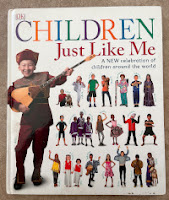

Children Just Like Me is a wonderful book that features modern children from different countries around the world, including many from Africa.
I would read about these children, maybe over several days if you have kids with short attention spans, and look up the country they are from on a map afterwards.
The newer version of this book features children from Morroco, Ethiopia, Tanzania, Botswana, Ghana, and South Africa. The older version of this book has a different set of children (from Egypt, Botswana, Ghana, Morocco, and Tanzania, and Ethiopia). Only the older book is also available free online through Open Library)
You could also see if there are any 365 degree online virtual tours in on the World Map at Round Me in the country that the children are from. I suggest letting kids explore the other "blue dots" in Africa in this site as well, as many as they would like to explore.
 I also suggest Africa, Amazing Africa: Country by Country for learning more about the various countries in Africa. It explores 55 different African countries, covering cultural highlights about each in a few short paragraphs, in an engaging and kid friendly way. I suggest pairing it with Children Just like Me, reading about the countries the children come from. If you have more time, you might want to read the whole thing all the way through. And if any of the countries pique your child's interest, and they want to learn more, check out the great homeschool resource list on African and African countries here. We don't have resources on all 55 countries yet, but the list will keep growing! Also, check out the craft book under the "More African Crafts" section below...you might find a craft to go with the country you are learning about too.
 African Homes

When I taught about Africa in our homeschool co-op, we were learning about African history, so I decided to have the kids make a traditional round house model, a traditional style of house which can be found in many areas of Africa.
Before we started the craft, though, I wanted to show the kids some examples of other types of buildings people in Africa live in. Because while people do live in houses like that in parts of Africa, even today, they also live in cities like this....

So I filled up this pinterest page not just with the traditional grass roofed round-houses, but modern houses and other interesting buildings in various African countries (and a few landscapes just for fun). I'm so glad I did. The kids were fascinated by the variety of houses I showed them--they really loved seeing the different styles. And a few of the kids were really surprised to learn that African cities had skyscrapers. Worldviews were expanded, and that made my day.

I found out something pretty cool while browsing those building pics on Pinterest. The buildings above are from a town in the middle of the Sahara called Tataouine...and yes, if that sounds a lot like Tatooine, the Star Wars planet, it's because it's name and style of buildings did inspire Tatooine in the original Star Wars Series. George Lucas didn't do any filming there but did film some scenes in another nearby Tunisian town.
CRAFT: ROUND HOUSE MODEL
So, sorry I don't have pictures to share of the clay round-house, but it's pretty simple. For a small solid house, just roll the clay on a flat surface until you have a round tube a little bigger than a quarter. Cut the tube down so it's not too high. Shape the top into a cone and top with dried grass for the roof. Use a small tool like a toothpick or chopsticks to embed a "door" into the house.
I tweaked this activity found in this book with activities related to Africa, which has many more great African activities.
More African Crafts
Traditional Crafts from Africa by Florence Temko, which you can also view for free at Open Library, has lots of fun African crafts and information about the countries and areas of Africa where they originate. It would be fun to go through the book, pick a craft to do, and look up the country it's from on a map.
You can also find some fun crafts in the free sample pages from Geography Through Art.
SECTION 2: African Folk Tales
Folk tales are a great way to learn about an area's culture. Your best bet for finding great African Folk tales to read is just to sit yourself down in your local library in their folk tale/fairy tale section, and find the section with African books (there often is one). But, I do have a few suggestions.
Ananse's Feast - An Ashante Tale
Ananse stories are popular folk tales in West Africa. We enjoyed Ananse's F
 east,
a children's book we found in our local library (you can also find it free online through Open Library). It has
charming pictures with African cultural details.
east,
a children's book we found in our local library (you can also find it free online through Open Library). It has
charming pictures with African cultural details. If you would
like to read more Ananse stories, there's a good chance you will be
able to find some more at your library too. Searching for these folk tales
can be a bit tricky,
though, because there are various spellings of the African names
involved ("Ananse" is often also spelled Anansi, and
some versions of these tales just call him "Spider.")
ACTIVITY: COOK AFRICAN FOOD
You can cook some of the traditional food mentioned in the story for an extra activity. I did a little research and I think these are the foods that were described (though I'm not sure about the Yams...there were several recipes with yams it could have been).
- Crisp Plantain - Kelewele (spicey, but spice can be reduced/omitted)
- Pepper Soup (spicy)
- Yams - Amala
- Coconut Rice
- Beans with Ground Peanuts
Though this book doesn't mention the spider's name, I'm pretty sure this is another Ananse tale...this time tied to the legend of how Kente Cloth, a traditional textile found in Ghana, was created. I found out about this book over at Kitchen Table Classroom, and loved it's beautiful, colorful illustrations.
You can also find this book free online at Open Library.
ACTIVITY: KENTE CLOTH CRAFT

Kitchen Table Classroom also had a fun craft you can do along with this story
making Kente Cloth patterns on paper (which you can see above). The post also talks about the meaning of the colors of Kente cloth and a little bit of it's history.

Children Just Like Me: Our Favorite Stories
 This book has favorite stories from some of the children featured in the original Children Just Like Me (the one published in 2005). Two of those stories are from Africa, one from Botswana and one from Morocco. The stories are short and the illustrations are beautiful. (Sadly, I couldn't find this one on Open Library, but I suggest it as it makes a great pairing with Children just like me. ).
I don't have activity suggestions for these stories, but they would be great if your children wanted to learn about other folk tales from around Africa.
SECTION 3: History of Africa
The video and book selections below are by no means a complete history of Africa, but just a sampling of historical events from ancient history to about the 1700s. However, if you want to get a general overview, you can explore this world map through time map (focusing on Africa). Underneath the map it shows major developments during each time period.
Though Egypt is absolutely part of Africa and it's history, I am not addressing Egypt directly here because Egypt is usually well covered in any world history curriculum, while the rest of African history is often under represented. Plus it's very easy to find other resources on Egypt. I do suggest finding a good book or video on Egypt to fill this out if Egypt hasn't already been covered in your history curriculum.
Prehistoric and Ancient Africa (Kerma, Nubia/Kush)
The Lost Kingdom of Kush by TedEd (4.34 minutes)
This short animated video sums up the history of the Kingdom of Kush. It doesn't get into as much detail as the video below, but is a good quick video, especially for younger kids.
Lost Kingdoms of Africa: Nubia (46 minutes)
This is a great documentary, and while it's not specifically aimed at kids, my son who was 7 at the time we watched this enjoyed it quite a bit (though I skipped over some parts).
I went ahead and charted out the minutes for your convenience below, to help you decide what parts to use and good stopping points if you break this up in sections, or want to watch only part of it. However, the video I had used was taken down and I had to find another one, so this might be slightly off.
I find younger children really enjoy the first part about the Rock Gong and Rock Art, but are less interested in other parts.
0 - 4:20 - Intro
4:20 - 7:41 - Rock Gong, beginning of Nubian culture
7:42 - 10:56 - Rock Art and Climate Change (When the Sahara Was Green)
10:56 - 14:20 - Kerma (main city in Kush/Nubia) and Deffufa (huge brick structure)
14:20 - 16:48 - Kerma Pottery
16:49 - 21:41 - Kerma Burial Plot
21:42 - 21:45 - What Happened to Kerma (transition)
21:45 - 26:34 - Egyptian Invasion/Jebel Barkal
26:35 - 29:19 - Sufi Mystics Today at Jebel Barkal
29:20 - 34:40 - Nubians Regain Rule/Tarharka Dynasty
34:41 - 38:43 - Desert Encroaches/Meroe
38:44 - 40:56 - Iron
40:56 - 41:58 - Desert Encroaches Again
41:59 - 45:41 - Nomads
45:42 - End - Central Sudan (Modern Times)
The following activities would be a good follow up to this video.
ACTIVITY: SAHARAN ROCK ART CRAFT
This rock art would fit in nicely after learning about
the rock art in the Sahara (first three sections of video above).
Before doing this activity I suggest looking at some examples of Saharan rock art here.
First, collect rocks to paint on. Red, black and brown are common colors for ancient rock art, because these pigments can be made more easily from things found in nature than some other colors. We just used
regular paint in these colors for the rock art painting shown below, but if you have time you can also make your own paint using minerals or gathered material, which would be really fun. For older kids, this article
has more about prehistoric paints, and they have some links toward the
bottom to paint-making activities that explores the chemistry behind it (a nice way to add in an little science).
Here's our rock art. Our son really enjoyed this.


The rock art craft pictured was actually from a craft we did while studying the Lascaux caves in France and Native American rock art in California, but when I saw the Saharan rock art I thought this activity would work well here as well.
ACTIVITY: MAKE MUD BRICKS

SUGGESTED BOOK - FOR NUBIA
Ancient Egyptians and Their Neighbors
If you want your children to learn more about ancient Nubia and do some crafts or activities related to it, this is the best book I've found with activities on the subject for children. It has a whole section on Nubia as well as sections on the Hittites, Mesopotamians, and Egyptians (a small section on the Nubian pharaohs is, if I remember right, in the section on Egypt). The only thing I dislike about this book is that it's entirely in black and white (save for the cover). Sadly this book is not available on Open Library.
Middle Ages to Renaissance
MANSA MUSA AND THE EMPIRE OF MALI
VIDEO: Mansa Musa - by TedEd (3.54 minutes)
A good short animated video about Mansa Musa, possibly the richest man who every lived, and his famous pilgrimage. I would watch this or the next video on Mali (which includes the story of Mansa Musa), but you wouldn't need to watch both.
VIDEO SERIES: The Empire of Mali - by Extra Credits (Series)
This animated web series covers not just Mansa Musa, but the Kingdom of Mali. It has 10 videos, each about 8-10 minutes long. I liked how this put Mansa Musa in context, and spoke more of the great civilization of Mali. (Contains some animated historical violence - preview before showing younger children).
Free Lesson on Mansa Musa from Stanford History Education Group
KINGDOM OF AKSUM
VIDEO: Lost Kingdoms of Africa - Ethiopia (58.51 minutes)
This video covers the medieval kingdom of Aksum, in the area that is now Ethiopia.
QUEEEN NZINGA AND THE MATAMBA KINGDOMS
VIDEO: Queen Nzinga Part I and Part II by Extra Credits
Queen Nzinga was a 17th-century queen of the Ndongo and Matamba Kingdoms in what is today known as Angola, who fought for the freedom of her people from the Portuguese. (Contains historical violence - preview before showing younger children).
Early Modern Period
I haven't done as much on the modern period, so I apologize that this is rather sparse.
THE ZULU
Shaka by Diane Stanley
A beautifully illustrated and well written children's book about the story of Shaka. The pictures are engaging very child friendly, though it does have descriptions of violence, so preview before reading to younger children. This book is also available for free on Open Library.
VIDEO: The Zulu - by Extra Credits (web series)
A great video about the Zulu that's more kid friendly than the Shaka Zulu movie.
(Contains historical violence - preview before showing younger children).

