Showing posts with label Middle Ages. Show all posts

Saturday, September 25, 2021

Videos About Christopher Columbus ...that are actually accurate!

Videos on Columbus that are actually accurate.


Several years back I did a post about Christopher Columbus fact checking a lot of the errors floating around.    Now, I'd like to share some short videos you CAN use to teach this history to children, without exposing kids to things they aren't ready for or sugar coating this history.   Further down on this page are some good videos related to Spanish exploration, conquest and colonization.

Recommended Columbus Videos


BrainPop:  Columbus
 

(Recommended for All Ages)
This was free when I first accessed it, but sadly it isn't now.  But, because this was the best video for elementary age kids on Columbus I've found, I couldn't leave it off the list.  It was kid friendly, animated, accurate, and didn't try to demonize Columbus or make him into a hero.  It also dealt to some extent with both the positive and negative ramifications of Columbus' journey, both for the people of Europe and the people of the Americas. (NOTE:  I didn't have a chance to look into the "extras" about Columbus they have...just the video, so can't comment on those). 


Crash Course World History:  15th Century Mariners:  Columbus, de Gama, and Zheng He
(Recommended for Upper Elementary through High School)
This video talks briefly about Columbus, along with two other sailors from this time.  This doesn't at all deal  with the results of Columbus' journeys, but later videos in this series do (see below), so combined with those this covers this well.   My middle-schoolers loved the humor in John Green's crash course videos.

CONTENT CONCERNS:  Contains one joke related to a Chinese explorer being a Eunuch that some may find inappropriate (minute 1:40-2:05, easy to skip if you want to). You could also just watch the part about Columbus (6:30-9:27), though I really think the it's worth adding the part about the Portuguese explorer De Gama, which really sets up why the Spanish were looking for a passage to Asia and would fund Columbus' journeys. (That starts at minute 4:24).


Crash Course World History:  The Colombian Exchange

(Recommended for Upper Elementary through High School)
This video shows the impact of Columbus' journeys and what followed on both sides the Atlantic, for good and bad, so it's a really important follow up to the last video.

CONTENT CONCERNS:   Smaller children might be scared by depictions of war and people dying of smallpox.  It uses OMG, spelled out, once (in an easily skippable side-segment in minutes 1:22-1:33).   There is, in talk about syphilis, some indirect reference to sex (in talking about how it was spread by sailors they mention a quote "sailors...are men without women and therefor men of many women.")


Bartolomé de las Casas: Conscious of an Empire
(Recommended for Middle School through High School)
I highly suggest this for high schoolers and middle schoolers who prefer un-animated documentaries.  This video is mainly about Bartolomé de las Casas, a priest who came to the new world shortly after Columbus had been removed of his governorship there, and later spent his life trying to end the enslavement and oppression of the native people in the Spanish colonies.   After briefly introducing De las Casas and Nicolás de Ovando (the 3rd governor of the new world), it backtracks to Columbus's previous journeys, including the establishment of colonies and subjugation of the native peoples, which continues until minute 12:04  (though I suggest watching the whole thing to learn more about what happened after Columbus in the Spanish colonies).    It is accurate overall, apart from one small error  mentioned below which is easy to discuss.  

CONTENT CONCERNS:  Contains one brief instance of cultural nudity.   Around minute 4:15 it briefly shows native people being shown to queen Isabela, including a woman with bare breasts (only slightly blurred).  It also contains more depictions of violence.  

Related to accuracy, it said that Bobadilla was sent back specifically to replace Columbus, but actually he was sent back mainly to investigate a colonist rebellion, though he had the power to replace Columbus based on his investigation.   Another important detail that is left out is how Bobadilla also mishandled the governing of the colonies, and that things actually got worse for the indigenous people under his government.  While Columbus and his brothers had tried to maintain discipline of the colonists through arguably cruel means, Bobadilla went in the other direction and let the colonists basically do what they wanted, including rape and abuse the native peoples without any censure (which I wrote about more in this article, in the section, "After Columbus".)


Biography.Com - Several Videos
(Recommended for Upper Elementary through High School)
There are three videos embedded in this article (and unfortunately when you load the article they all begin playing at once...so you will want to scroll down and turn off the other two before showing to your kids).   All are are in the more typical older documentary style (not animated).     The first video covers the basics of the Columbus journeys and the first Spanish colonies started under Columbus.  My only slight criticism is they could have said something to clarify the differences at the time between subjugation under a feudal system (which we might recognize as a form of slavery today, but which they would not have been thought of that way then), and chattel slavery (Columbus subjugated many Taino on his 2nd journey and later enslaved some of these after the Taino fought back over their treatment).   But overall this is accurate. 

The 2nd video listed is more about the ships used on the journey, and the 3rd is a short footnote with a few more details.

The text article is also well done, but contains one error (it says on his 4th journey he was shipwrecked in Cuba when he was actually shipwrecked in Jamaica).

CONTENT CONCERNS:   The videos contain some artistic nudity (middle age drawings of the natives without clothing). 


Recommended Videos on

Civilizations of Central and South America 

 and Spanish Conquest/Colonization

The following aren't directly about Columbus, but can make a good follow up to show what happened in the new world after the voyages of Columbus.


Crash Course US History:  The Black Legend, Native Americans, and Spaniards
(Recommended for Middle School and High School)

This video covers, very briefly, the Native American peoples who lived in what is now the US before European contact, and covers what happened to them during Spanish colonization/exploration (which was after Columbus, but still related). My one minor quibble is that it sort of suggests that Bartolomé de las Casas was the only Spaniard fighting against the oppression of the natives, while in fact, he was convinced that the enslavement of the native peoples were wrong by other priests who were preaching this before him.   But none were as vocal or steadfast in their fight, so I don't think that oversimplification is worth skipping this video, which overall sets up well what happened to the native people during colonization.  

CONTENT CONCERNS:  It has pictures/depictions of massacres and torture which are not suitable for younger kids, and which also contain nudity (medieval artistic nudity).  

Extra Credits History:  Bartolomé de las Casas - Changing Your Mind
(Recommended for All Ages)
This one deals a little bit more with
Bartolomé de las Casas, who is mentioned briefly in the last video. I was so excited when this came out because this is probably my favorite historical character and the person who got me studying this time period. He was a Spanish priest who came to the colonies just after Columbus had his governorship stripped. While he originally participated in the oppression of the indigenous people he soon realized what was happening to them was wrong and spent the rest of his life trying to end their oppression.  The video did an excellent job and even managed to be completely kid friendly.

NOTE TO CHRISTIAN READERS:  Though this is a secular resource, they did very well at portraying de las Casas' faith.   They did however offer a brief  critical note about proselytizing (presenting as a negative that las Casas supported it).  Las Casas believed in
proselytizing through love and logic, not force or coercion, and preached that this was the only Biblical way to share the gospel. 


Crash Course US History:   The Spanish Empire, Silver, and Runaway Inflation
(Suggested for Middle School and High School ...may work for late elementary also.)
This covers, briefly, the empires that existed before Spanish Conquest and what followed in the next several hundred years, and the results in America, Spain, and even China. 


Extra Credits - The Inca Empire
(Suggested for Mid-elementary through High School)
This series, about an hour long in all, tells what life was like in the Inca Empire and than chronicles it's conquest by the Spanish.  

CONTENT CONCERNS:   There is violence but it is animated and somewhat abstract.   I let my child watch other videos by Extra Credits with similar levels of violence around age 8. 


TedEd - The Rise and Fall of the Inca Empire

(Suggested for All Ages)
This video also has some history of the Inca, and tells of their conquest.  It has less detail than the longer video by Extra Credits.   I feel like this video is more appropriate for younger kids because of the way it's told, in a way that reminds me of how a fable is told and with paper cut-out people that I think make the violence even more abstract than the stick people drawings of Extra Credits.  


Thanks to Pixabay for the images used to make the intro graphic.


Tuesday, March 17, 2020

UNIT STUDY: Africa

Africa is an area of the world that too often gets shortchanged in our study of history, so I've sought out resources to learn more about the many cultures and and people's on this vast continent. 

The following is a collection of fun activities, videos, and books for learning about Africa.   Some of these are things I've already shared related to our regular history lessons, but I'm collecting them here for those wanting to do a separate Unit Study of Africa.  


This post contains some affiliate links through which I can earn commission


SECTION 1:   AFRICA TODAY
This sections explores various areas and people in Africa today.   I suggest doing these activities over several days. 

Africa Overview

Africa is a continent with various cultures, landscapes, and over 50 different countries.  


This short video gives kids an idea about how wonderfully diverse this continent is.


Platteklip Gorge, South Africa


What Life is Like In Africa


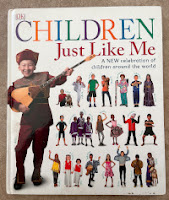
Picture of book Children Just Like MePicture of cover of book, Children Just Like Me (New Edition)
Children Just Like Me is a wonderful book that features modern children from different countries around the world, including many from Africa.  

I would read about these children, maybe over several days if you have kids with short attention spans, and look up the country they are from on a map afterwards. 

The newer version of this book features children from Morroco, Ethiopia, Tanzania, Botswana, Ghana, and South Africa.   The older version of this book has a different set of children (from Egypt, Botswana, Ghana, Morocco, and Tanzania, and Ethiopia).  Only the older book is also available free online through Open Library)

You could also see if there are any 365 degree online virtual tours in on the World Map at Round Me in the country that the children are from.    I suggest letting kids explore  the other "blue dots" in Africa in this site as well, as many as they would like to explore.

I also suggest Africa, Amazing Africa:  Country by Country for learning more about the various countries in Africa.   It explores 55 different African countries, covering cultural highlights about each in a few short paragraphs, in an engaging and kid friendly way.   I suggest pairing it with Children Just like Me, reading about the countries the children come from.  If you have more time, you might want to read the whole thing all the way through.    And if any of the countries pique your child's interest, and they want to learn more, check out the great homeschool resource list on African and African countries here.   We don't have resources on all 55 countries yet, but the list will keep growing! Also, check out the craft book under the "More African Crafts" section below...you might find a craft to go with the country you are learning about too. 


African Homes


A village with round mud houses with grass roofs
Picture of houses  in Nakpanduri, Ghana by Hugues

When I taught about Africa in our homeschool co-op, we were learning about African history, so I decided to have the kids make a traditional round house model, a traditional style of house which can be found in many areas of Africa.

Before we started the craft, though, I wanted to show the kids some examples of other types of buildings people in Africa live in.   Because while people do live in houses like that in parts of Africa, even today, they also live in cities like this....

Large city with skyscrapers - Table Mountain, South Africa


So I filled up this pinterest page not just with the traditional grass roofed round-houses, but modern houses and other interesting buildings in various African countries (and a few landscapes just for fun).    I'm so glad I did.  The kids were fascinated by the variety of houses I showed them--they really loved seeing the different styles.  And a few of the kids were really surprised to learn that African cities had skyscrapers.  Worldviews were expanded, and that made my day.


Tataoine buildings - a picture by Ksar ouledsoltane06
Berber Grain Silos in Tataouine, Tunisia
Photo by Asram (Self-photographed) via Wikimedia Commons 


I found out something pretty cool while browsing those building pics on Pinterest.  The buildings above are from a town in the middle of the Sahara called Tataouine...and yes, if that sounds a lot like Tatooine, the Star Wars planet, it's because it's name and style of buildings did inspire Tatooine in the original Star Wars Series. George Lucas didn't do any filming there but did film some scenes in another nearby Tunisian town.


CRAFT: ROUND HOUSE MODEL  

So, sorry I don't have pictures to share of the clay round-house, but it's pretty simple.   For a small solid house, just roll the clay on a flat surface until you have a round tube a little bigger than a quarter.   Cut the tube down so it's not too high.   Shape the top into a cone and top with dried grass for the roof.   Use a small tool like a toothpick or chopsticks to embed a "door" into the house. 

I tweaked this activity found in this book with activities related to Africa, which has many more great African activities.


More African Crafts
Traditional Crafts from Africa by Florence Temko, which you can also view for free at Open Library, has lots of fun African crafts and information about the countries and areas of Africa where they originate.   It would be fun to go through the book, pick a craft to do, and look up the country it's from on a map.  


You can also find some fun crafts in the free sample pages from Geography Through Art.


SECTION 2:  African Folk Tales

Folk tales are a great way to learn about an area's culture.  Your best bet for finding great African Folk tales to read is just to sit yourself down in your local library in their folk tale/fairy tale section, and find the section with African books (there often is one).   But, I do have a few suggestions. 


Ananse's Feast - An Ashante Tale
Ananse stories are popular folk tales in West Africa.  We enjoyed Ananse's Feast, a children's book we found in our local library (you can also find it free online through Open Library).  It has charming pictures with African cultural details. 

If you would like to read more Ananse stories, there's a good chance you will be able to find some more at your library too. Searching for these folk tales can be a bit tricky, though, because there are various spellings of the African names involved ("Ananse" is often also spelled Anansi, and some versions of these tales just call him "Spider.")

ACTIVITY:  COOK AFRICAN FOOD
You can cook some of the traditional food mentioned in the story for an extra activity. I did a little research and I think these are the foods that were described (though I'm not sure about the Yams...there were several recipes with yams it could have been). 


Though this book doesn't mention the spider's name, I'm pretty sure this is another Ananse tale...this time tied to the legend of how Kente Cloth, a traditional textile found in Ghana, was created.   I found out about this book over at Kitchen Table Classroom, and loved it's beautiful, colorful illustrations.  

You can also find this book free online at Open Library.


ACTIVITY:  KENTE CLOTH CRAFT

Kitchen Table Classroom also had a fun craft you can do along with this story making Kente Cloth patterns on paper (which you can see above).    The post also talks about the meaning of the colors of Kente cloth and a little bit of it's history.


Children Just Like Me:  Our Favorite Stories

This book has favorite stories from some of the children featured in the original Children Just Like Me (the one published in 2005).   Two of those stories are from Africa, one from Botswana and one from Morocco.   The stories are short and the illustrations are beautiful.  (Sadly, I couldn't find this one on Open Library, but I suggest it as it makes a great pairing with Children just like me. ).


I don't have activity suggestions for these stories, but they would be great if your children wanted to learn about other folk tales from around Africa. 


SECTION 3:   History of Africa
The video and book selections below are by no means a complete history of Africa, but just a sampling of historical events from ancient history to about the 1700s.   However, if you want to get a general overview, you can explore this world map through time map (focusing on Africa).   Underneath the map it shows major developments during each time period.

Though Egypt is absolutely part of Africa and it's history,   I am not addressing Egypt directly here because Egypt is usually well covered in any world history curriculum, while the rest of African history is often under represented.   Plus it's very easy to find other resources on Egypt.   I do suggest finding a good book or video on Egypt to fill this out if Egypt hasn't already been covered in your history curriculum. 


Prehistoric and Ancient Africa (Kerma, Nubia/Kush)


The Lost Kingdom of Kush by TedEd (4.34 minutes)
This short animated video sums up the history of the Kingdom of Kush.  It doesn't get into as much detail as the video below, but is a good quick video, especially for younger kids.

Lost Kingdoms of Africa: Nubia  (46 minutes)
This is a great documentary, and while it's not specifically aimed at kids, my son who was 7 at the time we watched this enjoyed it quite a bit (though I skipped over some parts).

I went ahead and charted out the minutes for your convenience below, to help you decide what parts to use and good stopping points if you break this up in sections, or want to watch only part of it.   However, the video I had used was taken down and I had to find another one, so this might be slightly off.  

I find younger children really enjoy the first part about the Rock Gong and Rock Art, but are less interested in other parts.

0 - 4:20 - Intro
4:20 -  7:41 - Rock Gong, beginning of Nubian culture
7:42 - 10:56 - Rock Art and Climate Change (When the Sahara Was Green)
10:56 - 14:20 - Kerma (main city in Kush/Nubia) and Deffufa (huge brick structure)
14:20 - 16:48  - Kerma Pottery
16:49 - 21:41 - Kerma Burial Plot
21:42 - 21:45 - What Happened to Kerma (transition)
21:45 - 26:34 - Egyptian Invasion/Jebel Barkal
26:35 - 29:19 - Sufi Mystics Today at Jebel Barkal
29:20 - 34:40 - Nubians Regain Rule/Tarharka Dynasty
34:41 - 38:43 - Desert Encroaches/Meroe
38:44 - 40:56 - Iron
40:56 - 41:58 - Desert Encroaches Again
41:59 - 45:41 - Nomads
45:42 - End   - Central Sudan (Modern Times)

The following activities would be a good follow up to this video.


ACTIVITY:  SAHARAN ROCK ART CRAFT

This rock art would fit in nicely after learning about the rock art in the Sahara (first three sections of video above).   Before doing this activity I suggest looking at some examples of Saharan rock art here.

First, collect rocks to paint on.   Red, black and brown are common colors for ancient rock art, because these pigments can be made more easily from things found in nature than some other colors.    We just used regular paint in these colors for the rock art painting shown below, but if you have time you can also make your own paint using minerals or gathered material, which would be really fun.  For older kids, this article has more about prehistoric paints, and they have some links toward the bottom to paint-making activities that explores the chemistry behind it (a nice way to add in an little science).

Here's our rock art.   Our son really enjoyed this.


This picture shows a rock painted with a bull and an archer

This picture shows the other side of the rock painted with hunters and animals.


The rock art craft pictured was actually from a craft we did while studying the
Lascaux caves in France and Native American rock art in California, but when I saw the Saharan rock art I thought this activity would work well here as well.


ACTIVITY:   MAKE MUD BRICKS


The Kerma Duffafa (explored in the Nubia video above, in minutes 10:56 - 14:20) was a huge structure made of mud bricks.   They most likely made them similarly to how the Egyptians did.   You can learn how to make mud bricks with your kids here. (Requires woo, mud from your back yard, and optional grass).


SUGGESTED BOOK - FOR NUBIA


Ancient Egyptians and Their Neighbors
If you want your children to learn more about ancient Nubia and do some crafts or activities related to it, this is the best book I've found with activities on the subject for children.  It  has a whole section on Nubia as well as sections on the Hittites, Mesopotamians, and Egyptians (a small section on the Nubian pharaohs is, if I remember right, in the section on Egypt).  The only thing I dislike about this book is that it's entirely in black and white (save for the cover).  Sadly this book is not available on Open Library.


Middle Ages to Renaissance


MANSA MUSA AND THE EMPIRE OF MALI

VIDEO:  Mansa Musa - by TedEd
(3.54 minutes)

A good short animated video about Mansa Musa, possibly the richest man who every lived, and his famous pilgrimage.   I would watch this or the next video on Mali (which includes the story of Mansa Musa), but you wouldn't need to watch both. 

VIDEO SERIES:  The Empire of Mali - by Extra Credits
(Series)
This animated web series covers not just Mansa Musa, but the Kingdom of Mali.  It has 10 videos, each about 8-10 minutes long.  I liked how this put Mansa Musa in context, and spoke more of the great civilization of Mali.   (Contains some animated historical violence - preview before showing younger children).

Free Lesson on Mansa Musa from Stanford History Education Group

KINGDOM OF AKSUM


VIDEO: Lost Kingdoms of Africa - Ethiopia (58.51 minutes)
This video covers the medieval kingdom of Aksum, in the area that is now Ethiopia.


QUEEEN NZINGA AND THE MATAMBA KINGDOMS


VIDEO:  Queen Nzinga Part I
  and Part II by Extra Credits

Queen Nzinga was a 17th-century queen of the Ndongo and Matamba Kingdoms in what is today known as Angola, who fought for the freedom of her people from the Portuguese.  (Contains  historical violence - preview before showing younger children).


Early Modern Period
I haven't done as much on the modern period, so I apologize that this is rather sparse.

THE ZULU


Shaka by Diane Stanley
A beautifully illustrated and well written children's book about the story of Shaka.   The pictures are engaging very child friendly, though it does have descriptions of violence, so preview before reading to younger children.    This book is also available for free on Open Library.


VIDEO:  The Zulu - by Extra Credits
(web series)

A great video about the Zulu that's more kid friendly than the Shaka Zulu movie. 
(Contains historical violence - preview before showing younger children).


Tuesday, October 9, 2018

Fact Checking Columbus


I knew that Columbus was a controversial figure,  especially regarding his treatment of the native people of South America.   So before I taught my son about him, I wanted to learn more about him myself--to get both sides of his story before I attempted to share it with my child.  One thing lead to another and I soon found myself knee-deep in research, eventually going back to even some translated original sources.  And, through that journey I stumbled on some gross inaccuracies in many popular blog posts and articles about this historical figure.     I wanted to help clear up a few of those today, and try to give a more well rounded picture both of Columbus and those who came after him.

WARNING:   This post contains some graphic descriptions of historical violence which are not appropriate for young children. 

  
Did Columbus Commit Atrocities Against Native Americans?

The answer to this is yes, though he didn't commit all the atrocities that have been attributed to him.

One of the most inaccurate (and sadly, often quoted) articles I came across  about Columbus was the The Huffington post article "Columbus Day? True Legacy: Cruelty and Slavery."    Here is a sample from that article where it talks about various atrocities it attributes to Columbus...

One of Columbus’ men, Bartolome De Las Casas, was so mortified by Columbus’ brutal atrocities against the native peoples, that he quit working for Columbus and became a Catholic priest. He described how the Spaniards under Columbus’ command cut off the legs of children who ran from them, to test the sharpness of their blades. According to De Las Casas, the men made bets as to who, with one sweep of his sword, could cut a person in half. He says that Columbus’ men poured people full of boiling soap. In a single day, De Las Casas was an eye witness as the Spanish soldiers dismembered, beheaded, or raped 3000 native people. “Such inhumanities and barbarisms were committed in my sight as no age can parallel,” De Las Casas wrote. “My eyes have seen these acts so foreign to human nature that now I tremble as I write.”
~ From "
Columbus Day? True Legacy: Cruelty and Slavery." by Eric Kasum, published October 11, 2010   

Bartolomé de las Casas spent his life speaking out against the atrocities committed against the native peoples of South America by Spanish settlers and conquistadors.  But he never worked for Columbus, and only arrived in the new world after Columbus had been stripped of the Governership of Hispaniola (the settlement Columbus had founded in what is now Haiti).   It was years after that when de las Casas became a priest, and even later when he came to the conviction that what was being done to the native peoples was wrong and started what would be a life long quest to end their oppression. 

The atrocities mentioned in the quote above are real, but those specific examples were not committed by nor ordered by Columbus.    De las Casas told how it was under Governor Bobadilla (the governor after Columbus, who had previously arrested Columbus and sent him back to Spain) that Spanish colonists would cut "slices off [Indians] to test the sharpness of their blades"  (History of the Indies, Book 2, Chapter 1, Collard translation).   The massacre where Indian children's legs were cut off as they fled happened under Nicolás de Ovando, the third governor of Hispaniola, not Columbus (History of the Indies, Book 2, Chapter 9, Collard translation).   And anything that de las Casas "saw with his own eyes"  would not have happened under Columbus, since de las Casas was not in the New World when Columbus governed there.

De las Casas did compile a history of Columbus' time in the new world using other's accounts though (including things he heard from people he knew personally during his time in the Americas).   In it he paints a picture of a man who started with noble aspirations and who initially treated the native people he encountered with some level of respect...but things changed over time.

After Columbus' first encounter with the inhabitants of the New World he wrote...
"I want the natives to develop a friendly attitude toward us because I know they are a people who can be converted to our Holy Faith more by love than by force."

(This was significant, as the different orders of Catholic priests in the New World would later be bitterly divided over whether the native people's were "rational beings" who should be brought to the faith peacefully, or people incapable of choosing for themselves who must be forcefully converted).   

On this first journey Columbus forbid his men from stealing or harming any of the tribes they met that were peaceful (though even at this early stage he took captives in order to teach them Spanish...with the intent to use them as guides and translators).    And when, on his second journey, he discovered that the men he left behind had been killed, he resisted the initial calls for vengeance on the local tribe, who claimed innocence.   

But as time went on Columbus' treatment of the natives began to change.  Life in the new world was not easy, and the colonists began to rely more and more on native help.   This was, at first, voluntary (goods were given in trade, and other help was possibly in hopes of making beneficial alliances).  But this changed during Columbus' 2nd voyage.

After Columubus had set up conlonies and outposts on Hispaniola, he left to explore Cuba.   But when he left he ordered a large amount of men to "journey the length and breadth of the island, enforcing Spanish control and bringing all the people under the Spanish yoke."  ( Las Casas on Columbus:  Background and the Second and Fourth Voyages pg 118). These men, in his absence, raped women, took men captive to be servants, and stole from the indigenous people, leading the tribe members to kill some Spanish soldiers, including burning down a building where 40 men were recovering from illness.    When Columbus returned he retaliated by ordering a raid of the tribe that did this,  killing many and enslaving a number of them. Soon, the four primary leaders of the Arawak people in Hispaniola were gathering for war to try to drive the Spanish from the Island. Columbus gathered a large number of troops, and joined with one tribal chief that allied with him, met them in battle.  In spite of the Spanish being greatly outnumbered,  due to the superior Spanish weapons, the four tribes were routed.


After this...

"The admiral [Columbus] made his way across much of the island over the course of the next nine or ten months, waging cruel war on all the rulers and people who did not come to accept his authority over them, as he himself explains in a number of letters he wrote to the king and queen and to others. These days and months saw devastation across a wide swathe of the country, with huge massacres, and the extermination of whole villages... But every day saw yet more butchery as they were killed in the cruelest and most inhuman of ways, easily overtaken by horses and...run through with a lance, or cut to shreds by a sword, or sliced clean through and then eaten and torn to pieces by dogs, with many of them being burned alive or subjected to merciless and brutal torture of all kinds. " 
Las Casas on Columbus:  Background and the Second and Fourth Voyages pg 148 

According to Las Casas, this continued until tribes surrendered and agreed to pay tribute or were driven to the mountains or other remote parts of the island. 

Here I need to address another myth...there is no evidence that Columbus had the hands cut off of Taino who did not deliver tribute.   He did require a hawks bell of gold for each man of a certain age, among other goods required as tribute, and this was something the natives had trouble delivering (so much so that the caciques tried to barter large amounts of land to get Columbus to remove this...and he did eventually reduce it to a lesser amount).  But the punishment remains unnamed, and was described as "light."  There's another excellent article that deals with this issue more fully, including exploring how this myth started.


Was Columbus a Slaver?

In the mindset of both Columbus and the Spanish monarchs, providing the "tribute" described above was not the same as "slavery."      This was a common practice at the time when one nation overthrew another.  But many of those captured during the conflict, before surrender, were directly enslaved and given to Spanish soldiers, and 600 of these prisoners of war were sent back to Spain to be sold as slaves.  Some were dying on the ships before they even left port.   So yes, Columbus was absolutely involved in enslaving native peoples.

Columbus saw enslaving and selling the native people's as a way to make the colonies profitable.      In a letter he encouraged the idea of selling natives as slaves on the mainland, saying he could send as many as 4,000 and that they could bring in 20 million profits.      He compared them to African slaves, writing that "...one of these is worth three of them, as I see it.   When I went to the Cape Verde Islands, where there is a great trade in slaves... I saw that that they demanded for the most decrepit of them eighth thousand maravedis." And he went on to say "Even if at first they die, that will not always be the case, for the same thing happened with the blacks and the Canarians at the beginning.  And the Indians even have an advantage over the blacks, for unless one escapes, his owner will not sell him for any amount of money."  (History of the Indies, by Bartolome de las Casas, Book 1, Chap 150, translated by Michael Hammer and Blair Sullivan in Las Casas on Columbus, The Third Voyage).

Later, the when a portion of the colonists revolted, he gave in to their demands and allowed them to have native people assigned to them--this became the start of the Encomienda system which Las Casas opposed as being oppressive and unjust (this system was more limited under Columbus than it later became).   Columbus also agreed that those colonists who chose to return to Spain could take a certain number of slaves with them.   These are the slaves which Queen Isabela objected to him sending, saying she wanted subjects, not slaves (and ordered that all be returned to the new world). 

Why did she object to these people being enslaved, but not the others?  Well, it's possible she did and it was just not recorded, but also, if she didn't object to the others it may have been because it was considered acceptable at the time to enslave captives in "just war."   People made to work on or provide produce from their own land, land that Isabel now considered part of her Kingdom, was also not considered slavery (it was just how things worked in a feudal society).    However, removing people from their own land and giving them to individuals who would make them work for them far from their home, that was clearly recognized as slavery even then. 


Did Columbus Encourage Sex Trafficking?

Many sites I've visited claimed that Columbus encouraged selling young girls for sex, using this quote....

"A hundred castellanos are as easily obtained for a woman as for a farm, and there are plenty of dealers who go about looking for girls; those from nine to ten are now in demand, and for all ages a good price must be paid."

That quote is indeed by Columbus, and if it sends chills down your spine and turns your stomach...well, I'm right there with you.   But Columbus was not praising this practice.  Though he was not against slavery, as discussed earlier, here he was talking about what other men have done as a way to distinguish himself from them. The letter, as a whole, is written to the woman who nursed queen Isabella's son, as a way to win favor and counter accusations made by some of the colonists against him.    Considering his audience and the purpose of the letter, the idea that is he is encouraging selling women and young children for sex in this context makes little sense.
 I should know how to remedy all this, and the rest of what has been said and has taken place since I have been in the Indies, if my disposition would allow me to seek my own advantage, and if it seemed honorable to me to do so, but the maintenance of justice and the extension of the dominion of Her Highness has hitherto kept me down. Now that so much gold is found, a dispute arises as to which brings more profit, whether to go about robbing or to go to the mines. A hundred castellanos are as easily obtained for a woman as for a farm, and there are plenty of dealers who go about looking for girls; those from nine to ten are now in demand, and for all ages a good price must be paid.

I assert that the violence of the calumny of turbulent persons has injured me more than my services have profited me; which is a bad example for the present and for the future. I take my oath that a number of men have gone to the Indies who did not deserve water in the sight of God and of the world; and now they are returning thither, and leave is granted them.

~Letter from Columbus to Doña Juana de Torres, 1500

In another letter, Columbus wrote...

Our people here are such that there is neither good man nor bad who hasn't two or three Indians to serve him and dogs to hunt for him and, though it perhaps were better not to mention it, women so pretty that one must wonder at it.  With the last of these practices I am extremely discontented, for it seems to me a disservice to God, but I can do nothing about it...[nor] other wicked practices that are not good for Christians.  For these reasons it would be a great advantage to have some devout friars here, rather to reform the faith in us Christians than to give it to the Indians."

~From another letter by Columbus, included in the biography Columbus by Felipe Fernández-Aermesto, pg 133-134

I can't tell from this passage whether Columbus was concerned for the women or just concerned about the spiritual state of his men.  But what is clear from these passages is that the native women were being sexually exploited, that Columbus didn't approve of the practice, but felt unable to stop it. 

It seemed this was a perpetual problem.   On his final journey to the New World when Columbus and his crew were shipwrecked in Jamaica and the indigenous people came out to trade with them, Columbus ordered all but two of the crew to stay on the ship.   One crew member,  don Hernando, wrote that Columbus did this  because "no manner or order or punishment could prevent our men from stealing and molesting women if they went ashore, and this would greatly endanger our friendly relations with the Indians." (History of the Indies, Book 2, Chapter 30, pg 133, Collard translation)  

This suggest that Columbus had attempted to prevent the rape of the native women through some manner of punishment in the past, and had given up on it.   Regardless, Columbus was not just culpable for not preventing their abuse:  he was responsible for enslaving native women and therefor putting them in a situation where sexual exploitation almost always follows.

Furthermore, Columbus bears fault for who he chose to bring to the New World.     He wanted the King and Queen to send men and women to help establish trading colonies there...but knowing that the monarchs were concerned about the financial burdens of supporting these colonies, he suggested that in stead of recruiting men and women who would have to be paid a wage, that the King grant pardons to criminals in exchange for a few years service in Hispaniola.   So, Columbus was directly responsible for the recruit of many of the "turbulent persons" who accompanied his 3rd voyage. 

Though not all of the men involved in the abuse were pardoned criminals.   A chilling account of rape and sexual slavery is found in a letter by Columbus' childhood friend, Michele da Cuneo ...

"...I captured a very beautiful Carib woman, whom the said Lord Admiral gave to me. When I had taken her to my cabin she was naked—as was their custom. I was filled with a desire to take my pleasure with her and attempted to satisfy my desire. She was unwilling, and so treated me with her nails that I wished I had never begun. But—to cut a long story short—I then took a piece of rope and whipped her soundly, and she let forth such incredible screams that you would not have believed your ears. Eventually we came to such terms, I assure you, that you would have thought that she had been brought up in a school for whores."
~Quote found via Wikipedia, cited from Cohen, J.M. (1969). The Four Voyages of Christopher Columbus. NY: Penguin. p. 139.  

After Columbus

I have seen many claim that Columbus was bad, even for his time.   The history shows that those who replaced him, however, did not do any better.


While it is certain that Columbus' practices in governing the colonies had dire consequences for the native populations, the condition of the native peoples under those those who came immediately after him was possibly worse.  In fact, in his section on Hispaniola in "Brief Account" de las Casas writes that not much of the devastation of the Islands, or unjust wars, happened before Queen Isabella's death (which also covers all the time that Columbus was governing there).   

While,  Columbus failed to restrain his men from abuses, Bobadillo allowed a free-for all.    This is how de las Casas describes life for the native peoples under Bobadillo and compares it to the time under Columbus...

[Bobadillo] assigned Indian tribes to them, making them very happy.  You should have seen those hoodlums, exiles from Castile for homicide with crimes yet to be accounted for, served by native kings and their vassals doing the meanest chores!   These chiefs had daughters, wives, and other close relations whom the Spaniards took for concubines either with their own consent or by force.   Thus, those 300 hidalgos lived for several years in a continuous state of sin, not counting those other sins they committed daily by oppressing and tyrannizing Indians....The comendador [Bobadillo]  didn't give a straw for all this:  at least he took no measures to remedy or avoid the situation.  He would frequently tell them take as many advantages as you can since you don't know how long this will last"; he cared even less for the hardships, afflictions and deaths of the Indians.   The Spaniards loved and adored him in exchange for such favors, help and advice, because they knew how much freer they were now than under Columbus.

The admiral [Columbus], it is true, was as blind as those who came after him, and he was so anxious to please the King that he committed irreparable crimes against the Indians.   However, if he did not report the harm that certain Spaniards caused them, and if he assigned a tribe of Indians...and a few others to do work for them or find gold, it seems the occasions were very, very rare, and he acted as if forced to it by his own men, on account of past rebellions.
~History of the Indies, Book 2, Chapter 1, by Bartolome de Las Casas (translated by Andree M. Collard)

Under Bobadillo the conditions changed from exploitation, to something worse.  Under his watch murder and abuse for sport took place...cutting off slices of Indians and beheading young boys for fun.   These were not actions that took place during wartime, but to native people who were complying with the demands of the Spanish.

And while the next governor, Nicolás de Ovando, was better at controlling the colonists, under his command there were massacres where native people were burned alive and children cut down as they tried to run away.   

Later, under future leaders and Conquistadors, the atrocities continued....people were not just slaughtered but tortured (men burned alive, boiled, eaten by dogs. etc.).

I believe the errors pointed that many of the errors I've pointed out in this article stem not just from poor researching or understandable mistakes, but from a human tendency to want to simplify history.   Many times in history the actions of many are combined into a tale of one legendary hero or villain.  But the history of the mistreatment of the Native Americans by Europeon colonists is larger and longer than just what happened under Columbus, and to quote a member of the Osage Nation...

"...by blaming Columbus for five centuries of history, we ignore the majority of that history, and risk repeating it."
-Patrick T. Mason


Did Columbus Really Discover America? 

It is true that Columbus was not the first European to make his way to American shores.   Lief Erickson discovered a route to North America hundreds of years before Columbus.   But Leif Ericson's discovery resulted only in a short lived settlement that was soon abandoned, and it's affect on world history was small.   Columbus' discovery, on the other hand, resulted in the lasting collision of two worlds long separated.   Whether you consider this a positive or negative development, it created a exchange of ideas, technologies, resources (and sadly, disease), that would change civilizations around the world, and is considered by many to be one of the most important events of history.

And it was still an achievement even if he wasn't the first.   To quote again from Bartolome de las Casas....

"Is there anything on earth comparable to opening the tightly shut doors of an ocean that no one dared enter before?   And supposing someone in the most remote past did enter, the feat was so utterly forgotten as to make Columbus's discovery as arduous as if it it had been the first time."
~History of the Indies, by Bartolome de Las Casas (translated by Andree M. Collard) - Book 1, Chapter 76, pg 35
    

Many have tried to trivialize Columbus accomplishment by pointing out how he was wrong about the size of the earth, or that he didn't realize he had found a new continent and thought that he had discovered a route to Asia.    But even considering these things, the journey he took across the Atlantic took skill and courage, and was a great feat in spite of the errors he made along the way.

I think as humans we have trouble holding two disparate things about a person in our mind.   Its easier for us to create one dimensional heroes and villains than to hold the truth that a person in one lifetime can do both horrible and admirable things, or that even admirable accomplishments can have negative effects.  

De las Casas, the same man I quoted who heaped high praise on Columbus for his discovery, also acknowledged how Columbus' feat was tainted by the actions that followed it.   He wrote....    

"...he would have done great things and produced inestimable benefit in this land if he had realized that these people did not owe anything to him or to any other person in the world just because they had been discovered."

~History of the Indies, Book 2, Chap 154.9, from Las Casas on Columubs:   The Third Voyage" translated by Michael Hammer and Blair Sullivan

That type of balance can be hard to come to.   Sometimes it's easy to just leave out the things, good or bad, that do not neatly fit into a simple caricature.  But to teach history well, it is important to try to teach history as it was, even with it's messy complex characters...not just to go the easy route of turning complex historical figures into simplified heroes and villains.


How Do We Teach This History?

So, how do we teach this complex and often brutal history...to children?   This is something I've struggled with myself.  In some sense, we simply can't.   When I first tackled the history of American exploration my son was only 6.   There was no way I was going to expose my son to descriptions of rape and torture and brutality.

But Columbus was an important figure who affected history in profound ways...so I couldn't just ignore his story (though I now think it would have been wiser to put off teaching it until my child was a little older).   I didn't want to build up Columbus as a hero, but neither did I want to set him up as merely a villain, as the truth seemed to lie somewhere in between.

I thought even at 6 my child could handle and, to some extent,  understand, the concept of slavery.  So, I found and read him a short children's book on Columbus that did at least spend some time talking about that, as well as talking about Columbus' life and voyages.   After we read the book my son looked up with questioning eyes...

"So, Columbus was a hero?"

"No, not exactly."  I replied, pointing him back to that page on how Columbus took slaves.

His brow knotted, and after a moment he looked up at me again.

"So, he was a bad guy?"

And there it was.   I always thought that it was teachers who taught children to see the world in terms of heroes and villains.   But even though I had gone out of my way to do the opposite, my child still saw it that way.   I had tried to show him shades of gray, but he wanted black and white.  Maybe that is just the way it is when we are young.  Sometimes it's hard to break from that when we're older too.

But shades of gray are important.   The ability to see both the good and the bad in an individual is necessary for so many reasons...not least of these because it's important for us to also see that in ourselves.   If we look through history and only see heroes and villains it colors our view of the people who are making history now.   Kids need to know that sometimes even people who seem like "good guys" can cause harm, and even people who seem to be "bad guys" sometimes still do some good things.


SUGGESTED HOMESCHOOL
RESOURCES ON COLUMBUS


Videos on Columbus

More will be added later...


CORRECTIONS & THINGS I'M STILL FACT CHECKING:

  • Earlier I included this sentence above:  "He pushed them to mine for gold, even cutting off the hands of some natives who did not bring him what he thought a sufficient amount (though, this was not particularly worse than the punishment he at times implemented on the Spanish colonists)."   Someone knowledgeable about  Columbus has contacted me about this, saying that he's found no proof that this punishment that this happened (hands were cut off for other reasons under Ovando, not Columbus, and Columbus did require gold as a tribute from some natives in an area near the mines, but I haven't found any original sources saying that he cut off hands of natives as punishment).  I've since found a full article on this, debunking this myth and showing how it started.  

    MORE ON THIS:   What I did find was the original reference to Columbus ordering a tribute of a hawksbill of gold in History of the Indies, on his 2nd voyage...this was after a number of tribes joined together to try to oust the Spanish, and the Spanish won that battle and then went and started attacking towns.   The tribes then surrendered and as part of that surrender agreed to tribute (a hawksbill of gold per man of a certain age who lived near the mines, and a certain amount of cotton per person who lived away from the mines...at regular intervals).  They did not say what the punishment for not bringing this was, only that it was "light" (in quotes, so it might have been Las Casas being sarcastic, but I'm not sure if the quotes were in the original or just the translation, which I should check).  The amount was hard to get and the chiefs tried to convince Columbus to take land in stead.  Eventually Columbus reduced the amount to a half hawks-bell.  There is no mention of hands being cut off as punishment, which, seeing how this is las Casas writing this, would be an odd omission if this actually happened, as he usually records those types of details.

  • I originally said Columbus brought pardoned criminals on his 2nd Voyage but it was actually his 3rd voyage.
  •  I wanted to clarify that while de las Casas was not in the New World when Columbus was governing there, there time in the New World did overlap slightly, but they only had opportunity to see each other during one brief period of time.   Las Casas arrived in the New World in the fleet that also carried Nicolas de Ovando, who would be Hispaniola's new governor.   Columbus, on his 4th and final voyage, arrived in the the carribean shortly after Ovando had started governing there, but de Ovando denied him port (wouldn't let him land on the island). Soon afterwards, while exploring Columbus shipwrecked on what today is Jamaica and spend nearly all of the rest of that voyage there, until he was finally able to send word and get rescued.   This time, de Ovando allowed him only Hispaniola briefly, and de las Casas was briefly able to meet him (he had also met him as a child in Spain...maybe on several occasions).   These are the meetings in person I am aware of between the two.   But de las Casas never personally witnessed Columbus in a governing roll, nor was he ever under Columbus' command.
     
  •  I have amended this article to better deal with Columbus use of slavery, including portions of a letter by Columbus I did not have when this article was first written.
  • I have amended this article to add more details about the war the the 5 Taino tribes on the 2nd journey, content that was missing from the first, abridged, version of History of the Indies which I read, but which I found in a more complete version (at least regarding the Columbus voyages), in VII of the Repertorium Columbianum, Las Casas on Columbus:  Background and the Second and Fourth Journeys.  
     

SOURCES:
 
History of the Indies, by Bartolomé de Las Casas, translated by Andree M. Collard. (heavily abridged translation)

Las Casas on Columbus, The Third Voyage (book containing the full translation of De las Casas' account of Columbus 3rd voyage from History of the Indies), Edited by Geoffrey Symcox and Jesus Carillo, and translated by Michael Hammer and Blair Sullivan, published by BREPOLS (Belgium) under the auspices of the UCLA Center for Medieval and Renaissance Studies

Las Casas on Columbus:  Background and the Second and Fourth Voyages, (book containing the full translation of De las Casas' account of Columbus 2nd and 4th voyages from History of the Indies), translated and edited by Nigel Griffin, published by BREPOLS (Belgium) under the auspices of the UCLA Center for Medieval and Renaissance Studies.

Historia de las Indias
I am currently going through and reading some of the untranslated chapters, with the help of Google translate (my Spanish being rather intermediate).

A Brief Account of the Destruction of the Indies by Bartolomé de las Casas (translated to English)

A Short Account of the Destruction of the Indies by Bartolomé de las Casas
 - this is another translation of the work above.   It is a little more readable, but each section is on another page making it harder to do a text search of.

Journals of the 1st Voyage of Columbus
This free online translation is searchable and has more content than some others.  There were 3 versions of Columbus journal we still have.  One by his son and two other versions transcribed by Bartolomé de las Casas, one of which had more content than the others (and which was discovered later).   This translation seems to take from all 3 versions.

Journals of the 1st Voyage of Columbus (another version)
This translation seems to have less content than the one above, probably just taking from the two versions of his journal and not from the 3rd that was found later (see note on Journal above). Footnotes are also somewhat different...not more or less, just different. 

Journals of the 1st Voyage of Columbus (another version)
This is similar to those above and I'm not sure what version it is, but just including it in case any of the above are taken down.

I, Columbus:  My Journal, edited by Peter and Connie Roop, translated by Robert H. Fuson (Great book for kids but very much abridged)

Columbus by Felipe Fernández-Aermesto

Christopher Columbus (History.com)

Why Columbus Day Courts Controversy (History.com)

Columbus - Wikipedia*

Lost Document Reveals Columbus as Tyrant of the Carribean

~Letter from Columbus to Doña Juana de Torres, 1500

Letter from Columbus to Luis de St. Angel on his first Voyage to America
This was written while in the Canary Islands on the way to America on his 2nd voyage, 15th of February, 1493, with a postscript on March 14th.

Bartolome de las Casas - Encyclopedia Britanica 

Bartolome de las Casas: The Only Way (introduction) by Helen Rand Parish

Bartolome de Las Casas : Great Prophet of the Americas by Paul S. Vickery

Forced Native Labor in 17th Century America

Lief Erickson - New World Encyclopedia

In tearing down Columbus, we ignore real violence against Indians, editorial in the Chicago Sun Times by Patrick T. Mason Oct 6, 2017, 6:26pm CDT
 

GRAPHICS (From Header)
Section of Le Retour de Christophe Colomb (1892)
Public domain in the United States


*While I tried to avoid using anything on Wikipedia that could not be verified elsewhere, it was a starting place for some research, and I did use one quote directly from there simply because it was the most complete version of the quote, in the most easy to read translation I could find online (and was sourced from a book which I didn't have access to but seemed a reputable source.)


OTHER ARTICLES FACT CHECKING THESE ISSUES
So, since writing this I've noticed a few others also tackling these errors.   I'm sharing links to some of them below.

Snopes Was Wrong About Columbus


Shared on Throwback Thursday.

 
Last Updated July 7, 2024